

Holo does what it says. $19/month buys you AI-generated ads, social posts, and email content — fast, on-brand, and ready in seconds. For solo founders and lean teams getting started, it's a solid entry point.
The limits show quickly. Holo generates content; it doesn't execute campaigns. There's no Meta account connection, no Klaviyo integration, no performance feedback loop. You still have to do the rest yourself.
This list covers five alternatives for DTC brands in 2026. Some compete directly with Holo on price and format. Others solve the bigger problem — not just content creation, but execution.
What Are the Best Holo Alternatives for DTC Brands?
Each tool solves a different version of the same problem. Needle is the full-stack upgrade for DTC brands that have outgrown DIY content tools. Google Pomelli is Google's free AI creative tool, backed by DeepMind models. Canva AI is the most widely used alternative for visual content creation. Predis.ai is the most ecommerce-specific pick, with direct Shopify integration. Copy.ai is the strongest option for DTC brands focused on ad copy and email writing.
| Platform | Starting price | Best for | Key differentiator | Free trial |
|---|---|---|---|---|
| Needle | From $2,999/mo | DTC brands wanting full execution | AI + human team; Meta, Klaviyo, and Shopify in one tab | No |
| Google Pomelli | Free (beta) | Brands needing quality creative at zero cost | DeepMind-powered; on-brand content from a URL | Yes |
| Canva AI | Free; ~$15/mo Pro | Teams wanting a visual content hub | Largest template library + AI layer for any format | Yes |
| Predis.ai | Free; ~$29/mo | Ecommerce brands wanting content from their Shopify store | Native Shopify integration; posts generated from product catalog | Yes |
| Copy.ai | Free; ~$49/mo | DTC brands prioritizing ad and email copy | Deep marketing copy templates built for conversion | Yes |
1. Needle: Best for DTC Brands That Want Execution, Not Just Content
Disclosure: Needle is our own product. We've included it because we believe it genuinely belongs on this list, but you should know we're not a neutral party.
Holo helps you generate content. Needle handles everything after that — and most of what comes before it. It's an AI-powered marketing team in one tab for DTC brands doing $1M–$10M — AI plus human strategists and designers who run the whole loop, not just generate content.
Connect Shopify, Klaviyo, Meta, Google, and TikTok. Needle's strategists map your brand and build a weekly campaign calendar. Designers and campaign managers produce the creative, set it up, and launch it.
Needle starts at $2,999/month as a flat fee, with no percentage cut of ad spend.
Key Features
- Strategic Edge — brand intelligence layer built during onboarding; maps your competitive landscape and drives every campaign recommendation
- Weekly Content Calendar — pre-loaded every Monday with ideas from Shopify data, Meta performance, and Klaviyo results
- Creative Production (AI + Human) — AI drafts every asset; Needle's designers polish it for brand voice and quality; creative volume is uncapped and revisions are unlimited
- Campaign Launch — sets up and deploys to Meta, Google, TikTok, and Klaviyo without manual uploads
- Momentum Report — weekly summary of what worked, what didn't, and what's next; replaces manual analytics pulls
Pricing
- Growth — $2,999/month: roughly $5–8K in monthly ad spend and ~5K active email subscribers
- Scale — $3,999/month: roughly $8–11K in monthly ad spend and 5K–10K active subscribers
- Custom — tailored pricing: $11K+ in monthly ad spend, 10K+ subscribers, or more complex needs (including seasonal spikes like BFCM)
Needle is one flat monthly fee set by ad spend and email list size — not by deliverable count, and with no percentage cut of ad spend. Creative volume is uncapped, and every tier includes hands-free campaign management, weekly ad optimization, a weekly Momentum Report, unlimited creative revisions, and a dedicated Needle strategist.
Pros & Cons
Pros:
- Human team handles production and launch — you just approve
- Covers Meta, Klaviyo, and Shopify from one tab; no separate tools or agencies needed
- System compounds weekly — gets smarter from your brand's data over time
- Brands running Needle for 3+ months report +177% annualized revenue uplift (top brands), +91% marketing efficiency, and 62% lower agency, freelancer, and tool costs (Needle's published averages)
Cons:
- Not a self-serve content tool — Needle manages execution, not you
- Priced by ad spend and email list size — the first published tier assumes roughly $5–8K in monthly ad spend and ~5K active subscribers, so smaller brands may fall below it
- Starting price of $2,999/month is far above Holo's $19–$39/month range
Customers
RTPTennis went from $3K to $4.8K in revenue per email send in month one. TWOOAK cut its cost per order from $41 to $19 and hit a peak marketing efficiency ratio of 41×. As Intended doubled its MER within 60 days and held a 6× ROAS for 8 months straight.
"It's like having a full marketing team in one tab… each email now brings in 3–4× ROI, and if something doesn't work Needle pivots fast." — JP, Heliotrope SF
2. Google Pomelli: Best Free Alternative for AI-Powered Brand Content
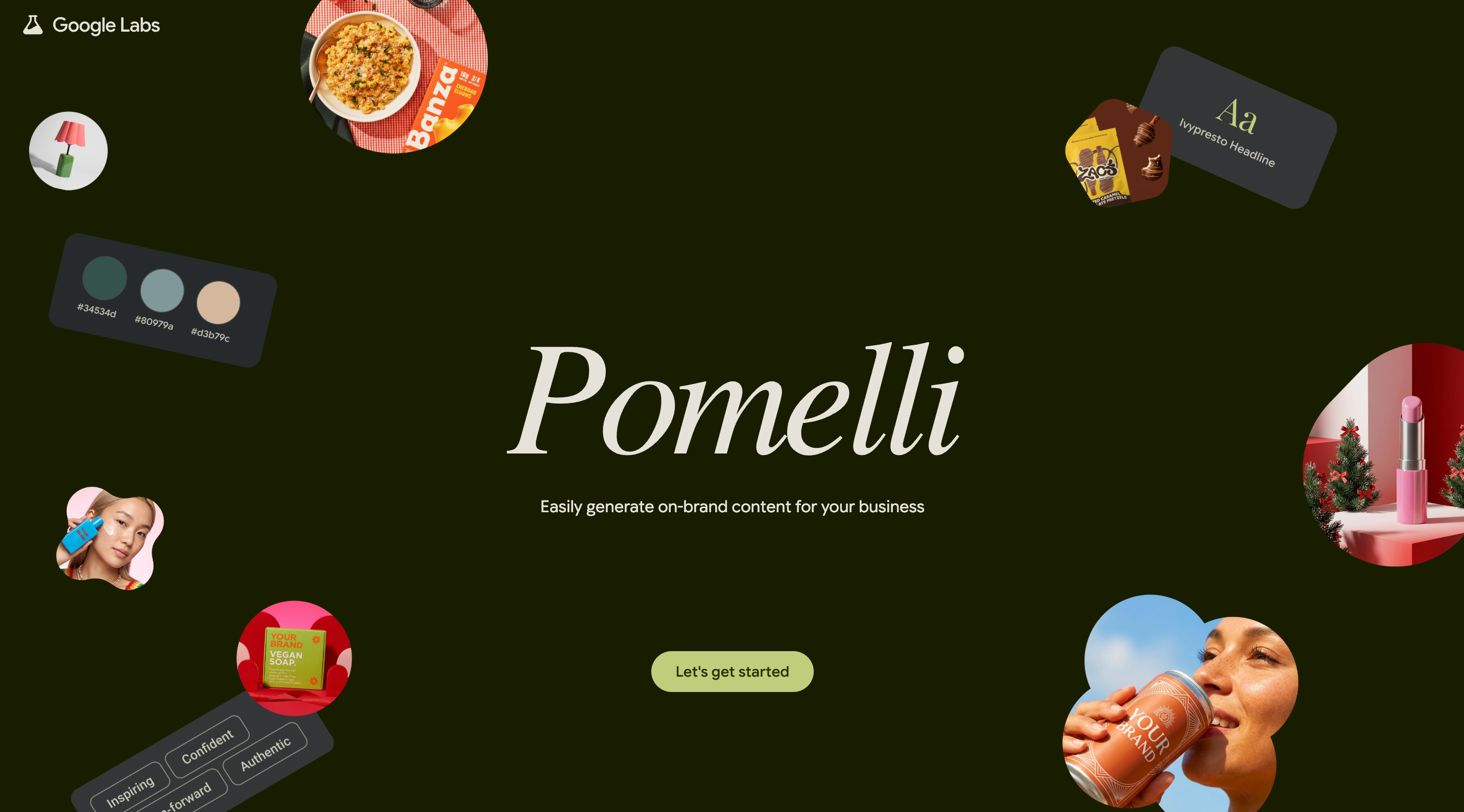
Google Pomelli is Google's free AI marketing content tool, currently in open beta. It scans your URL, builds a Business DNA from your brand's colors and tone, and generates on-brand content variations. DeepMind models power both image generation (Nano Banana 2) and video animation (Veo 3.1) — quality unavailable elsewhere at this price.
Where Holo costs $19–$39/month, Pomelli is completely free during beta — no credits, no watermarks. Ten on-brand variations generate in 30–90 seconds. Social posts, ad banners, email creative, and product photography are all covered.
The catch: English-only, no campaign execution, and post-beta pricing is not yet confirmed.
Key Features
- Business DNA — scans your website URL and auto-extracts brand colors, fonts, tone, and visual style; no manual setup required
- Multi-Format Generation — social posts, ad banners, and email creative for Instagram, Facebook, LinkedIn, and X
- Pomelli Animate — converts static creatives to video animations for Reels, TikTok, and YouTube Shorts via Veo 3.1
- Pomelli Photoshoot — transforms product photos into studio-quality and lifestyle shots via Nano Banana 2
- 10 Variations Per Generate — produces multiple on-brand options per session, faster than most comparable tools
Pricing
Free during the open beta — no credits, no watermarks, no subscription. Available in 170+ countries. Google has signalled a freemium model post-beta; specific paid tier pricing has not yet been confirmed.
Pros & Cons
Pros:
- Completely free during beta — full-quality AI creative at zero cost
- Backed by Google DeepMind models — generation quality unavailable to independent tools at this price
- Business DNA extraction from URL means zero manual briefing required
- No signup friction; available in 170+ countries
Cons:
- English-only — not useful for non-English DTC markets
- No campaign launch or execution — content generation only
- No Shopify integration or product feed connection
- Post-beta pricing and free tier limits are unconfirmed — could change significantly
- No performance feedback loop; does not learn from live ad results
Customers
Google Pomelli is in open beta. Independent testers report approximately 40% faster asset creation compared to Canva for social content. Quality is strongest for brands with a clear visual identity on their website — less effective for generic or minimal brand sites.
3. Canva AI: Best for Visual Content Creation at Any Scale
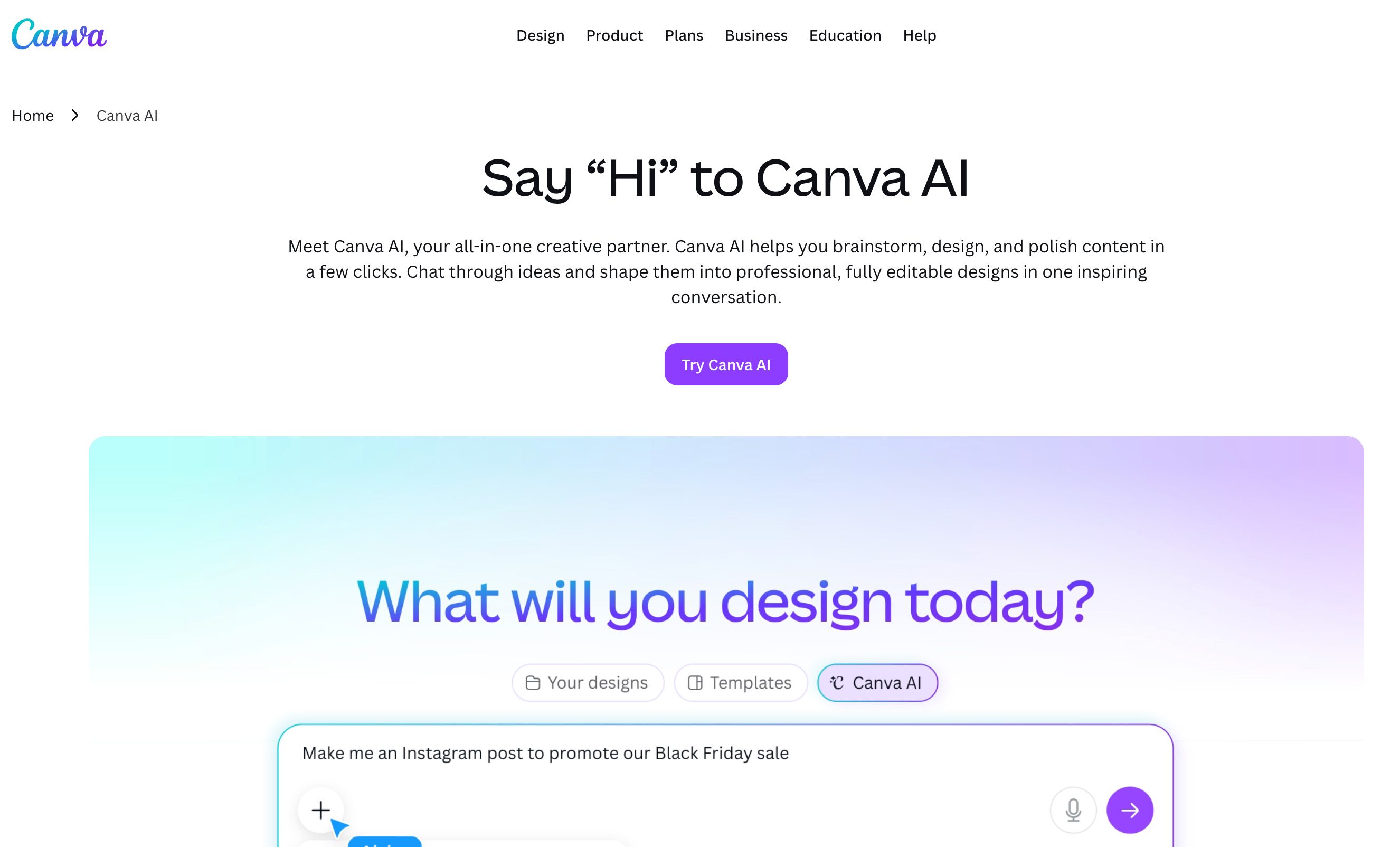
Canva is the most widely used visual content creation tool in the world, with over 100 million users. Magic Studio — Canva's AI layer — adds text-to-image generation, AI design suggestions, background removal, and a writing assistant. Every template in Canva's library (social posts, ads, email banners, and more) sits alongside these AI tools.
Where Holo is DTC-specific and built for ecommerce content, Canva is broadly applicable. The depth of templates and AI features outpaces Holo at comparable price points. DTC brands use it for static ad creative, story content, UGC-style mockups, and email banners.
Canva's free plan includes the full template library with limited AI credits. Pro starts at approximately $15/month per user and unlocks unlimited Brand Kits, Magic Studio, and premium templates.
Key Features
- Magic Studio — AI image generation, background removal, magic eraser, text-to-image, and design suggestions in one suite
- Magic Write — AI copywriting assistant for captions, ad copy, email subject lines, and social posts
- Brand Kit — stores brand colors, fonts, and logos; keeps every asset on-brand automatically
- Template Library — thousands of templates for ads, social posts, email headers, stories, and Reels
- Team Collaboration — real-time editing and commenting for marketing teams; no separate tool needed
Pricing
- Free: full template library, limited AI credits per month
- Pro: ~$15/month per user (unlimited Brand Kits, Magic Studio, premium templates)
- Teams: ~$10/month per user (annual billing, 5+ users)
- Enterprise: custom pricing
Pros & Cons
Pros:
- Best-in-class template library — the widest format range of any tool on this list
- Brand Kit ensures visual consistency across every asset without extra effort
- Free plan is genuinely capable — not a demo-only experience
- Real-time team collaboration built in from day one
Cons:
- Not DTC-specific — no Shopify integration or product feed connection
- No campaign launch or execution — creates content only
- No performance feedback loop or ad account connection
- AI features are an add-on to a design tool, not built for DTC content workflows
Customers
Canva is used by over 100 million people across businesses of all sizes. DTC brands use it heavily for paid social creative, email banners, and story content. It holds strong ratings across app stores and review platforms and is one of the most frequently cited visual tools in DTC founder communities.
4. Predis.ai: Best for Ecommerce Brands Creating Social Content from Shopify
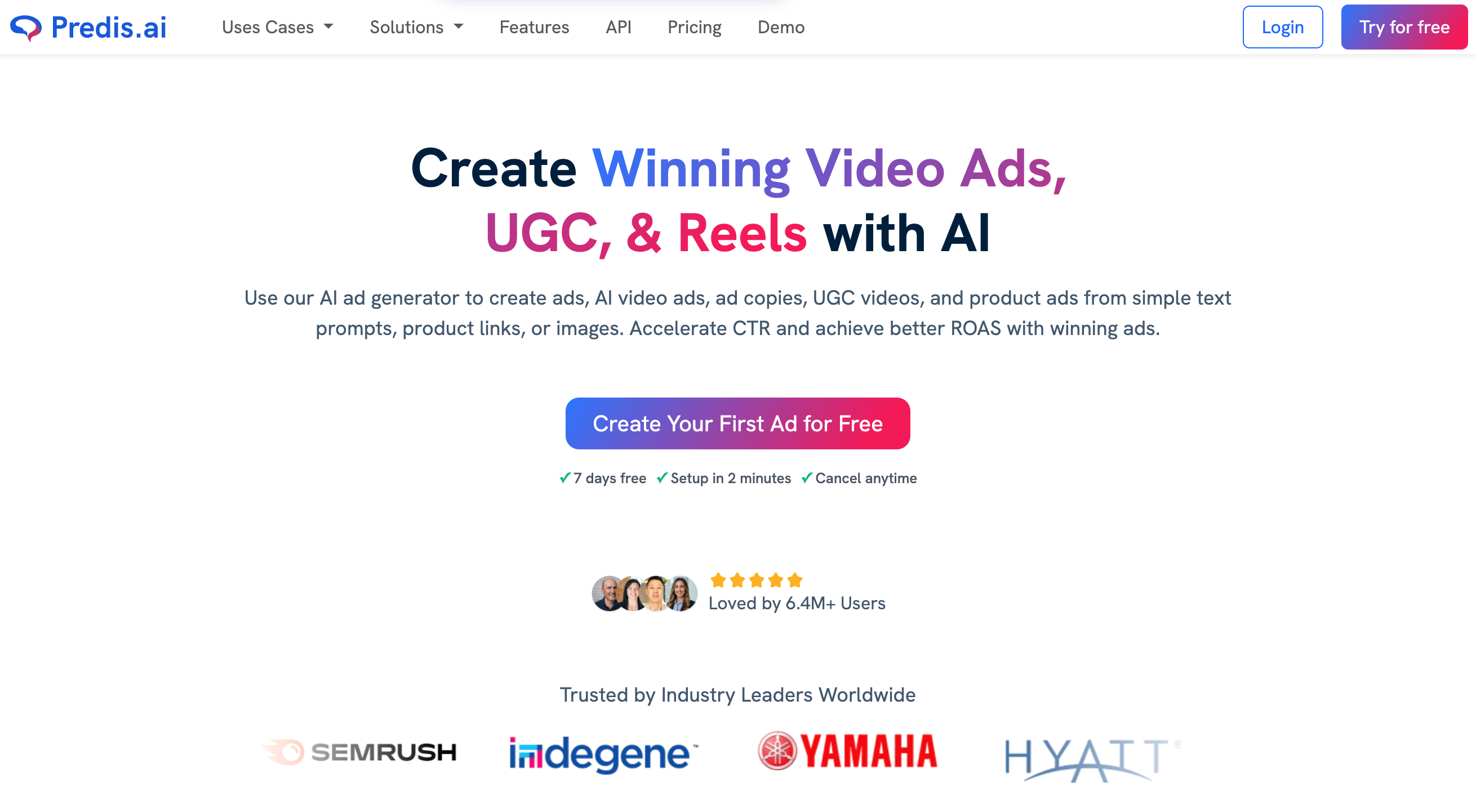
Predis.ai is an AI social content tool built specifically for ecommerce. It integrates directly with Shopify — pulling your product catalog to generate social posts, video scripts, and ad creative automatically. Most AI content tools require manual briefing; Predis.ai reads your store.
The core format is social-first: posts for Instagram, Facebook, and TikTok generated from product URLs, promotions, or campaign themes. A caption engine, hashtag generator, and competitor ad analysis tool are all included. It's the most ecommerce-native alternative to Holo on this list.
A free plan is available with limited monthly posts. Paid plans start at approximately $29/month.
Key Features
- Shopify Integration — connects to your product catalog; generates posts from live product data without manual briefing
- Multi-Format Content — static posts, Reels/TikTok video scripts, carousels, and story formats across Instagram, Facebook, and TikTok
- Caption Engine — generates captions with brand voice, CTA options, and relevant hashtags built in
- Competitor Analysis — surfaces competitors' top-performing ad content for reference and creative direction
- Content Calendar — plans and schedules posts across channels from a single view
Pricing
- Free: limited monthly posts
- Starter: from ~$29/month
- Agency plans: higher tiers for multi-brand management
Pricing scales with post volume and number of brand workspaces.
Pros & Cons
Pros:
- Most ecommerce-native tool here — Shopify integration removes manual product briefing entirely
- DTC-specific formats for Instagram, Facebook, and TikTok built in
- Competitor ad analysis adds strategic context beyond content generation
- Free plan available before any budget commitment
Cons:
- Social and ad content focused — less depth on email content compared to Holo
- No campaign execution — publishing goes through a scheduling layer only
- No performance feedback loop; does not learn from live ad results
- Smaller company and user base than Canva or Copy.ai
Customers
Predis.ai is used by thousands of ecommerce brands managing social content in-house with small teams. Most reviews highlight the Shopify integration and time saved on product-specific caption writing. It's a common tool for DTC brands running Instagram and TikTok without a dedicated social media manager.
5. Copy.ai: Best for DTC Brands That Prioritize Ad Copy and Email Writing
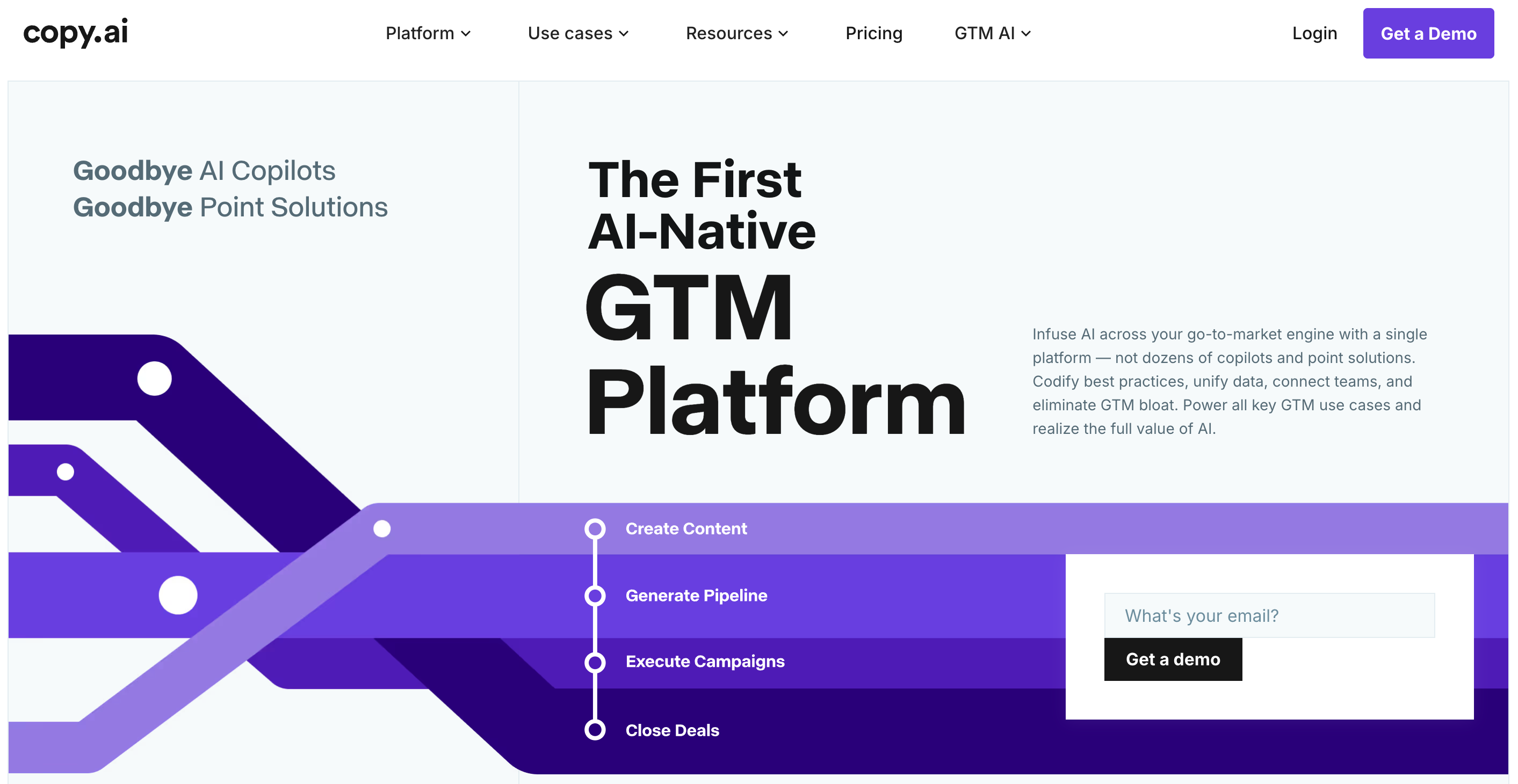
Copy.ai is an AI marketing copy platform built for conversion-focused content. It covers ad copy, email sequences, landing page copy, and product descriptions — all through conversion-focused templates. Where Holo focuses on visual creative, Copy.ai goes deeper on written output.
DTC brands use it for Meta ad copy variants, email subject lines, product page copy, and SMS messages. A brand voice feature trains the tool on your tone. Team workflows reduce repetitive briefing for marketing teams managing high content volume.
A free plan covers basic usage. Paid plans start at approximately $49/month.
Key Features
- Ad Copy Templates — structured templates for Meta, Google, and TikTok ad copy; multiple variants generated per brief
- Email Copy — subject lines, body copy, and CTA suggestions for promotional and lifecycle email campaigns
- Product Description Generator — writes product page copy from bullet points or product details
- Brand Voice — trains on your existing content to maintain tone consistency across all outputs
- Workflows — multi-step pipelines that chain prompts together; reduces repetitive manual briefing
Pricing
- Free: limited monthly runs
- Starter: from ~$49/month
- Advanced: higher tiers with team collaboration and more monthly runs
- Enterprise: custom pricing
Pros & Cons
Pros:
- Strongest written copy output of any tool here — built for conversions, not just awareness
- Good ecommerce-specific templates for ads, email, and product pages
- Brand voice training makes output more on-brand over time
- Free plan available before any spend commitment
Cons:
- Weak on visual content — primarily a writing tool, not an image or video generator
- Less DTC-specific than Holo or Predis.ai — templates span all industries
- No Shopify integration or product feed connection
- No campaign execution or performance tracking
Customers
Copy.ai is used by marketing teams across industries, including a large ecommerce base. DTC brands use it most for Meta ad copy testing and email campaign writing. It holds strong ratings on G2 and is commonly cited alongside Jasper as one of the top AI writing tools for performance marketers.
Frequently Asked Questions
Why would a DTC brand switch from Holo?
Holo is a strong entry-level tool for content generation. Brands outgrow it when they need execution, performance tracking, or a human team — not just content. Cost isn't usually the issue; capability is.
Which Holo alternative is cheapest?
Google Pomelli is currently free — zero monthly cost during the open beta. Canva and Predis.ai both offer free plans with meaningful features. Copy.ai also has a free tier for limited use.
Which alternative is best for Instagram and TikTok content?
Predis.ai is the most purpose-built for DTC social. It pulls directly from Shopify, generates posts for Instagram and TikTok, and includes a content calendar. Canva is the better pick if template variety and visual quality are the priority.
Does any alternative include campaign execution?
Needle is the only option here that executes campaigns — launching directly to Meta, Google, TikTok, and Klaviyo. The other four generate content only; publishing and campaign setup remain your responsibility.
Which alternative is best for teams rather than solo founders?
Canva AI and Copy.ai both have real-time team collaboration. Needle includes a dedicated team by design — strategists, designers, and campaign managers handle everything for you. Predis.ai offers agency plans for multi-brand management.
How does Needle compare to Holo for a brand doing $1M in revenue?
Holo generates content. Needle generates, publishes, and optimizes — with a human team doing the work. At $1M in revenue, the ROI question changes: Needle's first tier is $2,999/month and assumes roughly $5–8K in monthly ad spend, so it fits brands already running meaningful spend. A 17× email return or a halved cost per order is the kind of result that has to justify that fee.
Conclusion: Which Holo Alternative Is Right for You?
The right pick depends on where Holo is falling short. If the limit is budget, Google Pomelli is free. If it's content quality and format variety, Canva AI covers more ground.
For Shopify-native product content, Predis.ai was built for that. For better ad and email copy, Copy.ai is the strongest written alternative.
For DTC brands doing $1M–$10M that have outgrown content-generation tools entirely — Needle is the upgrade. It's the only option here that handles strategy, creative, and campaign launch with a human team in the loop. If you're tired of generating content only to manage the rest yourself, see how Needle works.