

Glowtify and Needle are two of the closest tools in this space. Both connect to Shopify and launch campaigns, though they sit at very different price points. The difference comes down to one thing: whether you want a human team behind your marketing or not.
Glowtify is self-serve: you get an AI strategy engine, content generator, and publishing tool across Meta, TikTok, Google, and Klaviyo. Needle wraps those same functions inside a human layer — strategists, designers, and campaign managers who polish every asset. One replaces the work; the other replaces the workers.
DTC brands at $1M–$10M face a specific problem: marketing can't be DIY anymore, but a full-service agency is too expensive. Both Glowtify and Needle target this gap. Choosing wrong costs time, money, and momentum.
This comparison covers both tools in detail — features, pricing, customers, and who each one is right for. If you're a DTC brand deciding between them, read on.
How Do Glowtify and Needle Compare?
Both tools target overlapping DTC audiences and share common infrastructure. The core difference: Glowtify is self-serve software; Needle is a managed service powered by software. Brands that can approve AI output themselves lean toward Glowtify; brands that want a team in the loop choose Needle.
| Needle | Glowtify | |
|---|---|---|
| Starting price | From $2,999/mo | $449/mo |
| Human team | Yes | No |
| Creative production | AI + human polish | AI only |
| Campaign execution | Yes | Yes |
| Channels | Meta, Google, TikTok, Klaviyo, Shopify | Meta, TikTok, Google Ads, Klaviyo, Mailchimp, WordPress |
| Per-brand learning | Yes (compounds weekly) | No |
| Free trial | No | No |
| Best for | Brands wanting execution managed | Self-serve teams wanting omnichannel coverage |
Needle: Best for Brands That Want Execution Handled
Disclosure: Needle is our own product. We've included it because we believe it genuinely belongs on this list, but you should know we're not a neutral party.
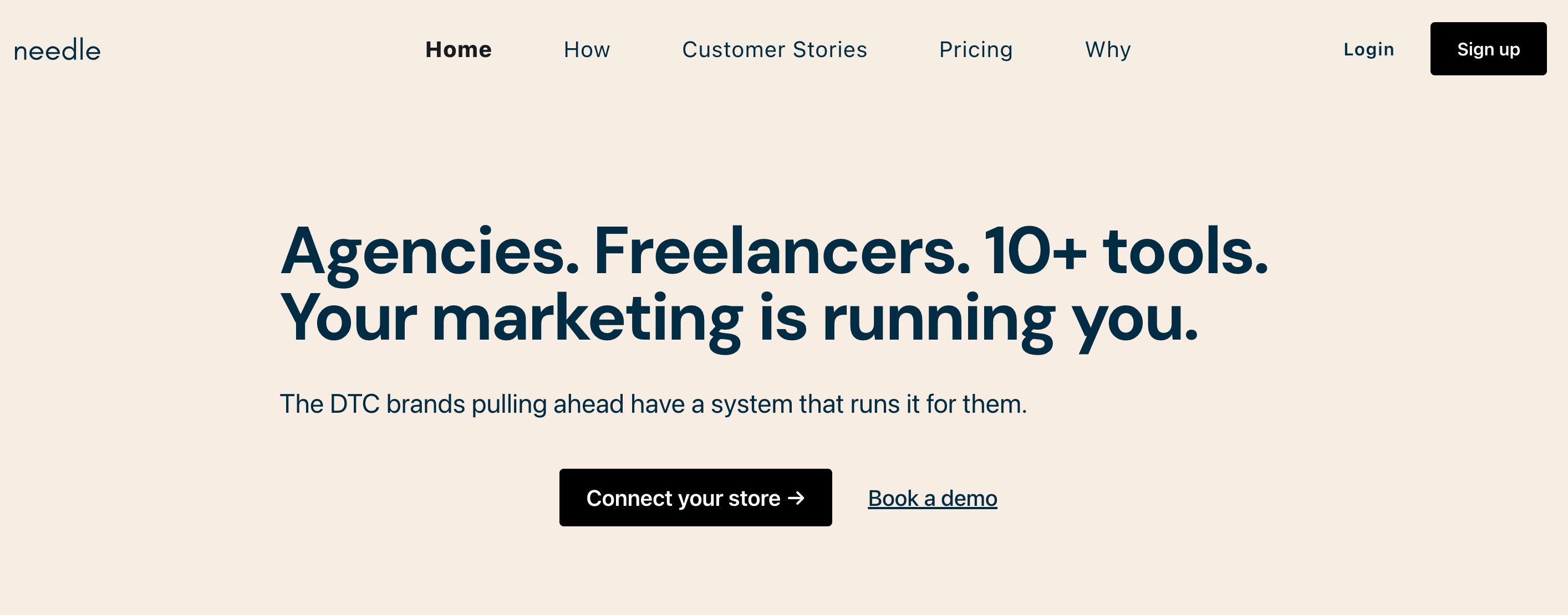
Needle is an AI-powered marketing team in one tab for DTC brands doing $1M–$10M in annual revenue. It connects to Shopify, Klaviyo, Meta, Google, and TikTok, then handles strategy, creative, and campaign launch — week in, week out. The brand approves; Needle executes.
Every asset Needle produces goes through a human review before it goes out. Strategists shape the brief; designers polish the draft; campaign managers hit publish.
Needle starts at $2,999/month as a flat fee, priced by ad spend and email list size with no percentage cut of ad spend. The Scale tier is $3,999/month, and Custom pricing covers larger or more complex accounts.
Key Features
- Strategic Edge — brand intelligence layer built during onboarding; maps the competitive landscape and informs every campaign recommendation
- Weekly Content Calendar — pre-loaded every Monday with campaign ideas from your data and performance history; takes minutes to approve
- Creative Production (AI + Human) — AI drafts every asset; Needle's designers polish it for brand voice and quality; creative volume is uncapped and revisions are unlimited
- Campaign Launch — sets up and deploys to Meta, Google, TikTok, and Klaviyo without manual uploads
- Momentum Report — weekly performance summary; what worked, what didn't, what's next
Pricing
- Growth — $2,999/month: roughly $5–8K in monthly ad spend and ~5K active email subscribers
- Scale — $3,999/month: roughly $8–11K in monthly ad spend and 5K–10K active subscribers
- Custom — tailored pricing: $11K+ in monthly ad spend, 10K+ subscribers, or more complex needs (including seasonal spikes like BFCM)
Needle is one flat monthly fee set by ad spend and email list size — not by deliverable count, and with no percentage cut of ad spend. Creative volume is uncapped, and every tier includes hands-free campaign management, weekly ad optimization, a weekly Momentum Report, unlimited creative revisions, and a dedicated Needle strategist.
Pros & Cons
Pros:
- Human team embedded in every account — strategists, designers, and campaign managers
- AI drafts + human polish = consistent brand quality, not raw AI output
- Compounding intelligence: system gets smarter from your brand's data every week
- Brands running Needle for 3+ months report +177% annualized revenue uplift (top brands) and +91% marketing efficiency (Needle's published averages)
Cons:
- Starting price of $2,999/month is far above Glowtify's $449/month entry
- Priced by ad spend and email list size — the first published tier assumes roughly $5–8K in monthly ad spend and ~5K active subscribers, so smaller brands may fall below it
- Not self-serve — execution is handed to the team, not managed by you
- 200+ customers — smaller installed base than Glowtify
Customers
RTPTennis went from $3K to $4.8K in revenue per email send in month one. TWOOAK cut its cost per order from $41 to $19 and hit a peak MER of 41×. As Intended doubled its MER within 60 days and held a 6× ROAS for 8 months straight.
"It's like having a full marketing team in one tab… each email now brings in 3–4× ROI, and if something doesn't work Needle pivots fast." — JP, Heliotrope SF
Glowtify: Best for Self-Serve Teams That Want More Channels
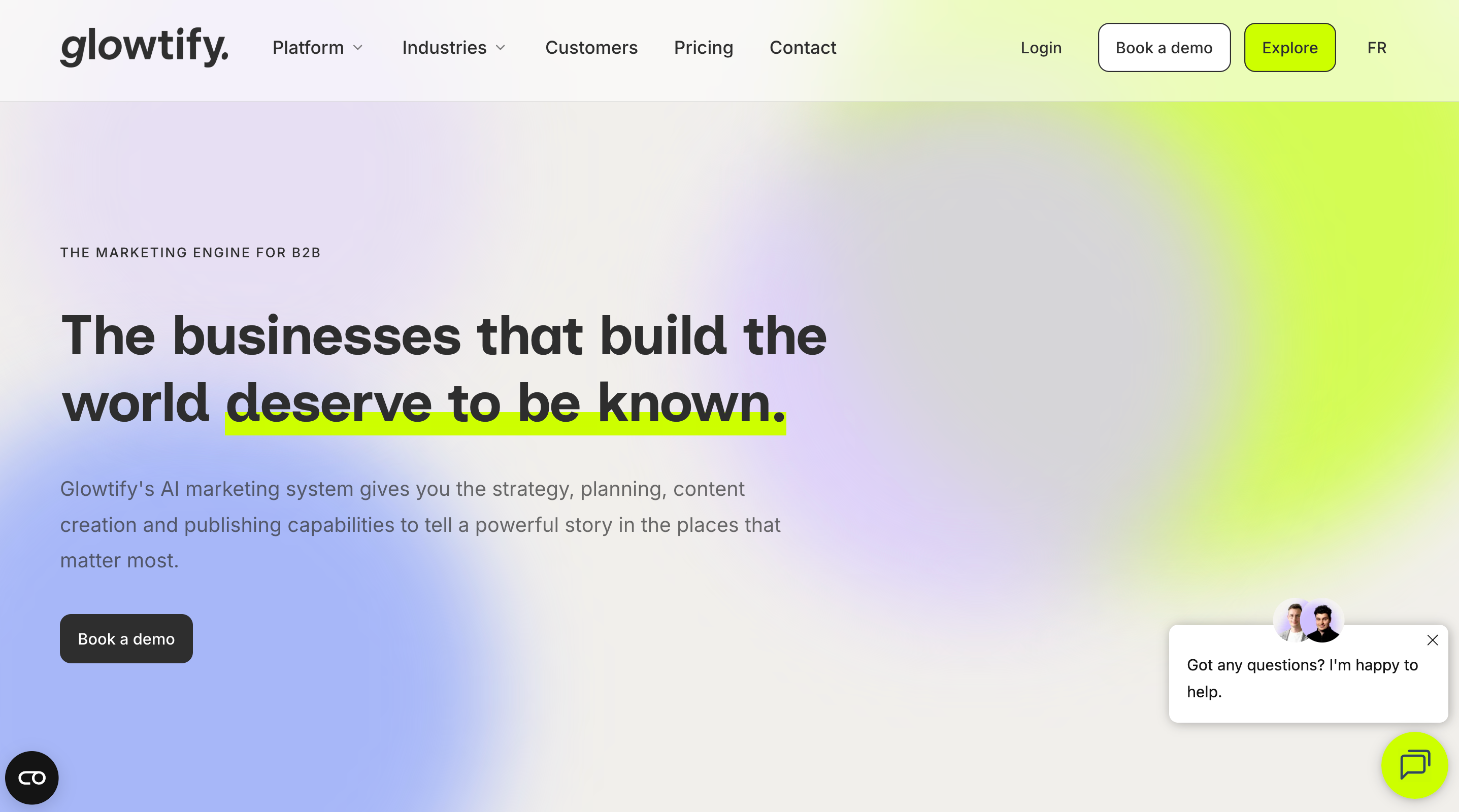
Glowtify positions itself as the AI marketing OS for small ecommerce teams. It ingests 2 years of Shopify transaction history to make campaign recommendations brand-specific. From there, it publishes to Meta, TikTok, Google Ads, Klaviyo, and more — all from one tab.
What you don't get: a human team. AI generates the content and you review and approve it. That's the trade-off — more channels, more independence, but all quality control sits with you.
Glowtify starts at $449/month (Startup, for brands under $100K/year revenue) and $899/month (Growth, for larger brands). The Growth tier includes a dedicated expert — but that's a consultant role, not a production team. Unlimited users on both plans.
Key Features
- AI Campaign Builder — generates campaign ideas, copy, and creative from your Shopify and channel data
- Shopify Data Ingestion — 2 years of transaction history makes recommendations brand-specific, not generic
- Omnichannel Publishing — one-click publishing across Meta, TikTok, Google Ads, Klaviyo, Mailchimp, and WordPress
- Strategy Module — weekly campaign recommendations surfaced from performance signals and store data
- Content Creation — 60+ formats including social posts, email campaigns, ad copy, and blog content
Pricing
| Plan | Price | For |
|---|---|---|
| Startup | $449/mo | Brands under $100K/year revenue; email support |
| Growth | $899/mo | Brands over $100K/year revenue; dedicated expert included |
Unlimited users on all plans. No minimum commitment listed.
Pros & Cons
Pros:
- Widest channel coverage on this list: Meta, TikTok, Google Ads, Klaviyo, Mailchimp, and WordPress
- 2-year Shopify history makes AI recommendations more brand-specific than generic tools
- Full control: you own the execution and quality review
- Unlimited users on all plans — no per-seat pricing
- Raised a $3.4M funding round to expand the product
Cons:
- No human production team — all creative quality control sits with the brand
- AI output is final; no human polish step before assets go live
- Estimated ARR of roughly $330K as of 2025, per Getlatka — still an early-stage SaaS business relative to its funding
- No per-brand compounding intelligence loop
- No established G2 or Capterra review profile yet
Customers
Brume achieved 4× more marketing execution without growing the team. Jolie Ride saw a 54.8% increase in total social media engagement year over year. Peppermint Cycling cut email campaign planning time by 50%.
Glowtify doesn't yet have an established G2 or Capterra profile — it's still early stage. Press coverage includes two features in BetaKit and coverage in The SaaS News. Graphite Ventures, a lead investor, called it "a painkiller solution that businesses urgently need."
Where Each Tool Wins
Creative quality: Needle
Needle's AI drafts every asset, then a human designer reviews and polishes it. That step exists specifically to catch what AI gets wrong — off-brand colors, awkward copy, generic layouts. The result is creative that looks like it came from an agency, not a content tool.
Glowtify generates content and you review it — the AI output is final, with no polish layer between generation and approval. That works if your team has a strong creative eye. If not, inconsistencies can slip through.
Channel coverage: Glowtify
Glowtify covers more channels: Meta, TikTok, Google Ads, Klaviyo, Mailchimp, and WordPress — all in one workspace. Needle launches to Meta, Google, TikTok, and Klaviyo, so paid-channel coverage now overlaps; the gap is mainly WordPress publishing.
Compounding intelligence: Needle
Every week Needle runs a brand's campaigns, it learns. What worked, what didn't, which creative angles got clicks — all of it feeds the next week's calendar. The system is designed to compound, not just execute.
Glowtify ingests your Shopify history to make initial recommendations more specific. But it doesn't have a per-brand learning loop built in — each week starts from available data, not from prior campaign results. For brands planning to stay on the tool long-term, that distinction matters.
Who it's built for
Needle is built for DTC founders and lean marketing teams who need more shots on goal without adding headcount. The target is brands doing $1M–$10M in revenue — proven product-market fit, growing fast, but marketing feels like chaos. If that's you, Needle was designed specifically for that moment.
Glowtify skews toward smaller teams — 2 to 5 people — who want to run more channels without hiring. It's a fit for a marketing manager who's capable but stretched too thin. The tool handles the repetitive parts; the person handles the judgment calls.
Frequently Asked Questions
What's the main difference between Needle and Glowtify?
The main difference is the human layer. Glowtify is self-serve software — you approve AI output and run execution yourself. Needle includes a dedicated team (strategist, designers, campaign managers) who handle production and launch for you.
Which is better for a DTC brand trying to scale?
Needle's system compounds — every week of data sharpens the next week's recommendations. Needle's published 3+ month averages — +177% annualized revenue uplift for top brands — are a strong performance signal. Glowtify doesn't have a per-brand learning loop built in yet.
Which tool has better channel coverage?
Glowtify covers more channels: Meta, TikTok, Google Ads, Klaviyo, Mailchimp, and WordPress. Needle now launches to Meta, Google, TikTok, and Klaviyo too, so channel coverage is close. Glowtify has the edge only if you also need WordPress publishing in the same workspace.
Which is cheaper?
Needle starts at $2,999/month — well above Glowtify's $449/month entry. At the mid tier, Needle's $3,999/month Scale plan includes a full human production team; Glowtify's $899/month includes a dedicated expert. That expert is a consultant role — not a creative team. The services differ enough that direct price comparisons can mislead.
Do both tools require a commitment?
Needle's pricing page doesn't state a contract length, so confirm terms before signing. Glowtify doesn't list a minimum commitment — both plans appear to be month-to-month. If trial-and-exit flexibility matters, Glowtify has the edge on paper.
Which is better if I already have a marketing person on my team?
If you have a marketing manager who can review and direct AI output, Glowtify fits. They can run the tool, own quality control, and expand channels. If you want to free that person from execution entirely, Needle handles production so they can focus on strategy.
Is Glowtify a good fit for a brand doing under $500K in revenue?
Glowtify's Startup tier is listed for brands under $100K/year revenue. But the tool is most useful at $500K–$10M, where the content volume needed justifies the subscription. Under $500K, free tools may cover the same ground at no cost.
Conclusion: Glowtify or Needle — Which Is Right for You?
Glowtify wins on channel coverage and self-serve flexibility. It costs less at comparable tiers and gives your team full control over execution. If you have someone to own the quality, Glowtify delivers the tools to cover more ground.
Needle is the pick if you want the work done, not just the tools to do it. It's the only option here with a human team embedded in every account — polishing creative and launching campaigns. If you're a DTC brand doing $1M–$10M and ready to hand off execution, see how Needle works.