
Your Shopify store is a machine. The right apps are the gears that make it run faster. The wrong ones are dead weight and wasted cash. Choosing the best Shopify marketing apps feels like a minefield. Every developer promises their tool is the one you need. It’s an expensive guessing game.
We've run brands. We've lived the chaos of testing and ditching tools. We found what actually moves the needle for 7- and 8-figure stores. This isn't a theoretical list pulled from marketing fluff. It’s a founder-to-founder guide to the apps that work. We've seen them succeed across 200+ DTC brands.
This guide breaks down the essential marketing stack for a growing Shopify store. We cover top apps for email, SMS, reviews, and analytics. For each app, you'll get a direct, no-nonsense look at:
What It Is: A quick summary of its core function.
Who It's For: The ideal DTC brand profile.
Pros & Cons: An honest assessment of strengths and weaknesses.
Pricing: A simple breakdown of what it costs.
You get the real story, not the marketing copy. Stop wasting money by understanding which tools actually generate revenue. This starts with knowing how to measure marketing ROI for each app. This list gives you the tools. Understanding their ROI ensures you’re building a tech stack that fuels profit, not just expenses. Let's get into it.
1. Needle
Needle is different. It's an AI-powered marketing team in one tab. Instead of giving you another tool to manage, it delivers a full marketing workflow. This includes strategy, creative, and campaign execution. It's a solid choice for brands that want a managed, hands-free marketing workflow rather than another tool to run.

The system connects to your Shopify, Klaviyo, Meta, Google, and TikTok accounts. It analyzes your performance data. From there, it generates a weekly marketing calendar with fresh ideas. Needle uses AI to draft emails, images, and videos. Human strategists and designers then refine them. This ensures the output maintains your brand’s voice. The result is a fast, predictable cadence. You approve polished concepts in minutes.
Who is Needle For?
Needle is built for established DTC brands. It works best for fashion, beauty, pets, and food companies with revenues between $1M and $10M. It hits the sweet spot for teams that have outgrown basic tools and want a managed marketing team rather than another app to run. As Jason Wong, founder of Doe Lashes, said, "Needle is one of those tools that can replace an entire marketing team." Source: X.
Core Strengths
Flat, Predictable Pricing: Growth is $2,999/month (roughly $5–8K in monthly ad spend) and Scale is $3,999/month (roughly $8–11K), with Custom pricing for larger accounts. It is a flat fee set by ad spend and email list size, with no percentage cut of ad spend.
Integrated Workflow: The system manages the entire process from data analysis to campaign launch. This eliminates juggling multiple tools and manually transferring assets.
Hybrid Human-AI Model: You get the speed of AI without sacrificing brand quality. Dedicated human strategists and creatives ensure every campaign is on-brand.
Speed and Cadence: Delivers a predictable weekly cycle of new campaigns. Creative volume is uncapped and revisions are unlimited.
Limitations
Niche Focus: The model is optimized for mid-market DTC brands. The first tier assumes roughly $5–8K in monthly ad spend, so very small startups might find it isn't the right fit.
Onboarding Period: While fast, there is an initial setup. The AI needs a short period to learn your brand's voice and style. This requires your feedback on early drafts.
Website: https://www.askneedle.com
2. Klaviyo
Klaviyo is the go-to for email and SMS marketing. It’s for DTC brands serious about growth. It integrates deeply with Shopify, pulling in customer data and purchase history. This allows for powerful segmentation that drives repeat purchases. If you want a single system for email and SMS that handles complex automation, Klaviyo is a top choice.

Its ecommerce-first design sets it apart. The app has pre-built flows for abandoned carts, welcome series, and post-purchase follow-ups. These are proven frameworks you can customize. The unified profile view is a major benefit. It shows every customer interaction across email and SMS.
Key Features & Use Cases
Advanced Segmentation: Create dynamic segments based on purchase frequency, AOV, or predictive analytics. This is critical for moving beyond simple list-blasting.
Unified Email & SMS: Manage both channels in one place. Build flows that use both email and SMS, like sending a text if an email is unopened.
Native Shopify Sync: Data syncs in near real-time. This makes triggers for flows like abandoned checkouts highly effective.
AI-Powered Assistants: Use AI to generate subject lines, body copy, and predict optimal send times.
Pricing
Klaviyo offers a free plan for up to 250 contacts. Paid plans are based on contact and SMS volume. A brand with 10,000 email contacts and sending 5,000 SMS messages a month can expect to pay around $200-$300.
Ideal for: $1M–$10M brands that need a powerful, unified system for email and SMS. It's built for stores that want to master their lifecycle marketing.
3. Omnisend
Omnisend is a popular email and SMS marketing app. It's known for its user-friendly interface. It competes with Klaviyo, offering a powerful yet simple tool. Its mix of email, SMS, and popups in one tool makes it a strong choice for unifying marketing efforts.

Omnisend stands out for its speed. The drag-and-drop builder and template library let you launch campaigns in hours, not days. This efficiency makes it one of the best Shopify marketing apps for teams that need to move fast. Over 65% of consumers who opened an abandoned cart email went on to click through, showing the power of these fast setups.
Key Features & Use Cases
Drag-and-Drop Builder: Easily create professional emails and popups with a simple visual editor.
Pre-Built Automations: Launch ecommerce workflows for abandoned carts, product abandonment, and cross-selling right out of the box.
Integrated Email & SMS: Manage and report on email and SMS campaigns from one dashboard.
On-Site Lead Capture: Use popups and gamified forms to grow your email and SMS lists.
Pricing
Omnisend has a free plan for up to 250 contacts. Paid plans start at $16/month. A store with 10,000 contacts can expect to pay around $100-$150/month for email and SMS.
Ideal for: SMB and mid-market brands ($500K–$5M) that need an easy-to-manage, all-in-one email and SMS tool. It's perfect for stores that prioritize speed.
4. Postscript
Postscript is an SMS and MMS marketing app built only for Shopify stores. It focuses on turning text messaging into a top revenue channel. For brands wanting a high-intent communication channel, Postscript provides the tools for rapid list growth and clear revenue tracking. It integrates with other key apps like Klaviyo and Gorgias.

Its Shopify-native approach makes it stand out. The app is designed for building automated flows and running A/B tested campaigns. It also manages real-time conversations with customers. This focus on conversational commerce helps brands build relationships and recover sales.
Key Features & Use Cases
Automation & Segmentation: Build SMS flows for abandoned carts, welcome series, and shipping notifications using Shopify data.
Two-Way Messaging: Respond directly to customer replies, turning texts into sales conversations.
List Growth Tools: Use compliant pop-ups and keyword opt-ins to grow your subscriber list.
Deep Shopify Integration: Pulls in customer data to create highly personalized text messages.
Pricing
Postscript offers a 30-day free trial. Paid plans start at $25/month. Plans scale up based on message volume. Note that carrier fees are an additional cost applied to each message.
Ideal for: Any Shopify brand looking to build a strong SMS channel. It's great for stores that want to drive quick revenue through high-urgency campaigns. Find out more at Postscript.
5. Attentive
Attentive is an enterprise-grade conversational commerce app. It focuses on SMS/MMS and email. It is built for brands that require high-touch service and advanced compliance. Its mobile capture technology makes it a leader in growing and monetizing SMS lists at scale.

Attentive's white-glove onboarding and support make it stand out. It is not a self-serve tool. It comes with a team dedicated to your success. The app excels at creating journeys that blend SMS, email, and push notifications. Features like Text-to-Buy remove friction and convert mobile shoppers effectively. This makes it a top choice for high-volume stores.
Key Features & Use Cases
Two-Tap Mobile Capture: Grow your subscriber list quickly with mobile-first pop-ups.
Cross-Channel Journeys: Create automated flows that combine SMS, email, and push notifications.
Enterprise Deliverability & Compliance: Get expert guidance to navigate complex legal requirements.
AI-Powered Optimization: Use AI for audience targeting, content generation, and journey optimization.
Pricing
Attentive uses quote-based pricing. It is a premium solution, so costs are typically higher than competitors. Expect pricing to be customized based on your needs.
Ideal for: Established brands with $5M+ in revenue that want to maximize their SMS channel. It's best for teams that value dedicated support.
6. Yotpo
Yotpo is a retention marketing suite. It bundles Reviews, Loyalty, and Subscriptions. It’s designed to help brands collect social proof and drive repeat purchases from a single system. This makes it one of the best Shopify marketing apps for brands looking to consolidate retention tools.
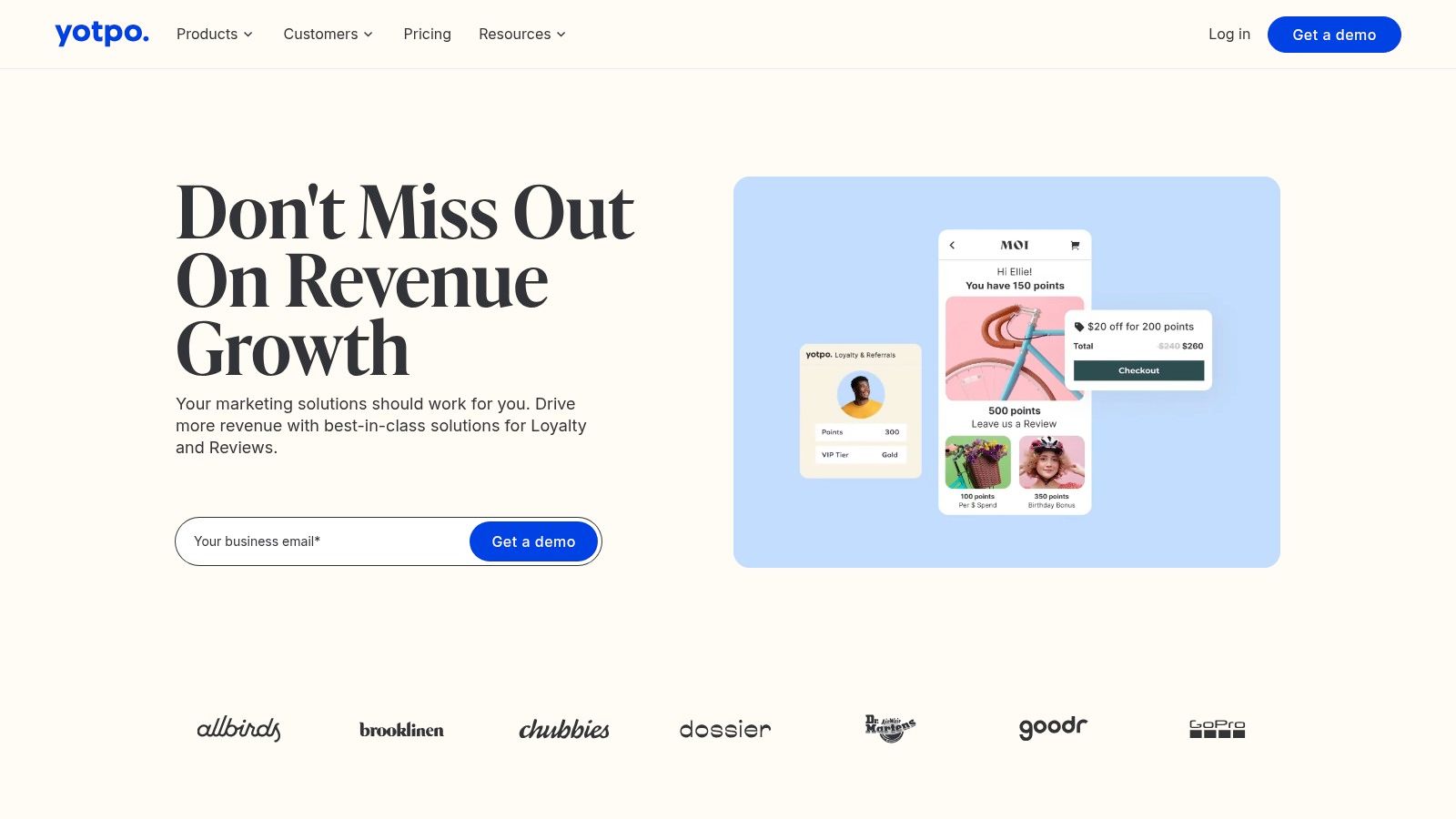
Yotpo’s ecosystem approach makes it stand out. It connects reviews and loyalty. For example, you can award loyalty points for leaving a review, creating a powerful feedback loop. The app is battle-tested with mid-market and enterprise Shopify Plus brands. It offers robust features for complex strategies.
Key Features & Use Cases
Reviews & UGC: Automate review requests and display user-generated content on-site to build trust.
Loyalty & Referrals: Build custom loyalty programs with points, VIP tiers, and rewards.
Integrated Product Suite: Bundle Reviews, Loyalty, SMS, and Subscriptions for a cohesive customer journey.
Omnichannel Features: For brands with a physical presence, Yotpo offers features like mobile wallet passes.
Pricing
Yotpo has a free plan for up to 50 monthly orders. Paid plans are quote-based. A brand using both Reviews and Loyalty can expect pricing to start in the low hundreds per month.
Ideal for: $5M+ brands that need an all-in-one retention solution. It's a strong fit for stores looking to unify reviews, loyalty, and referral marketing.
7. Okendo
Okendo is a customer marketing tool that goes beyond simple reviews. It gathers reviews, user-generated content (UGC), and zero-party data through surveys. This helps brands understand their customers better. It integrates cleanly with other key apps like Klaviyo, allowing you to use review data in marketing flows.

Okendo’s blend of UGC collection with zero-party data makes it a strong contender. Instead of just asking "How did you like this product?", you can build post-purchase surveys. This data is invaluable for personalizing future marketing. Research shows that 80% of consumers are more likely to buy from a company that offers personalized experiences.
Key Features & Use Cases
Reviews & UGC: Collect rich reviews with photos, videos, and custom attributes. Display them in high-performing on-site widgets.
Zero-Party Data Quizzes: Build product recommendation quizzes to capture first-hand customer data.
Post-Purchase Surveys: Ask targeted questions after checkout to gather insights on marketing attribution.
Syndication: Push your reviews to key channels like Google Shopping and Meta.
Pricing
Okendo's plans start at $199/month. This covers up to 500 monthly orders. Higher-tier plans add more features and support higher order volumes.
Ideal for: Brands doing $1M+ that want to move beyond basic reviews. It's a great fit for stores that want to use customer feedback to power a more personalized strategy. Visit Okendo's website to learn more.
8. Upsell.com (ex-ReConvert)
Upsell.com, formerly ReConvert, is designed to increase average order value (AOV). It focuses on in-cart, checkout, and post-purchase upsell opportunities. The app uses AI-powered recommendations and bundles to present relevant offers. It’s one of the best Shopify marketing apps for immediate AOV improvements.

Its focus on the post-purchase moment makes it effective. The one-click post-purchase offer is a high-converting placement. The customer has already completed their initial transaction. The drag-and-drop funnel builder allows merchants to test different offer sequences.
Key Features & Use Cases
One-Click Post-Purchase Offers: Display targeted upsells after checkout. Customers can accept with a single click.
Drag-and-Drop Funnel Builder: Create and A/B test multi-step upsell and downsell funnels.
Checkout Extensions (Shopify Plus): Add upsells directly within the Shopify checkout page.
Trigger-Based Segmentation: Show specific offers based on cart contents or order value.
Pricing
Upsell.com offers a free 30-day trial. Paid plans start at $29.99/month. Plans scale based on your store's total monthly orders.
Ideal for: Any brand looking to quickly increase AOV. It's particularly useful for stores with complementary products that can be bundled.
9. Triple Whale
Triple Whale is an analytics app for Shopify brands. It offers a server-side pixel for more accurate attribution. It also has a central dashboard that consolidates data from all your ad channels. This gives you a single source of truth for making smarter decisions on ad spend.
Its focus on attribution makes it a core part of the modern DTC tech stack. The "Triple Pixel" helps you understand the full customer journey. It assigns value to multiple touchpoints, not just the last click. It also includes post-purchase surveys to gather zero-party data. For founders running paid ads, this app helps answer, "What is actually working?"
Key Features & Use Cases
Triple Pixel Attribution: Get a clearer picture of multi-touch attribution, overcoming iOS tracking limits.
Consolidated Reporting: View performance from Meta, Google, and TikTok in one dashboard.
Post-Purchase Surveys: Ask customers "How did you hear about us?" right after they buy.
AI Assistants (Moby): Use AI to get quick summaries of your performance and receive recommendations.
Pricing
Triple Whale’s pricing is based on your Gross Merchandise Volume (GMV). Plans start at $129/month for brands under $1M in annual revenue. The cost scales as your revenue grows.
Ideal for: DTC brands spending over $10k/month on paid ads. It’s perfect for founders who want to understand how their marketing budget impacts the bottom line.
10. Nosto
Nosto is a Commerce Experience Platform. It excels at on-site personalization and product discovery. It offers AI-powered search, merchandising controls, and UGC displays. For Shopify Plus merchants, it extends this power into the checkout.
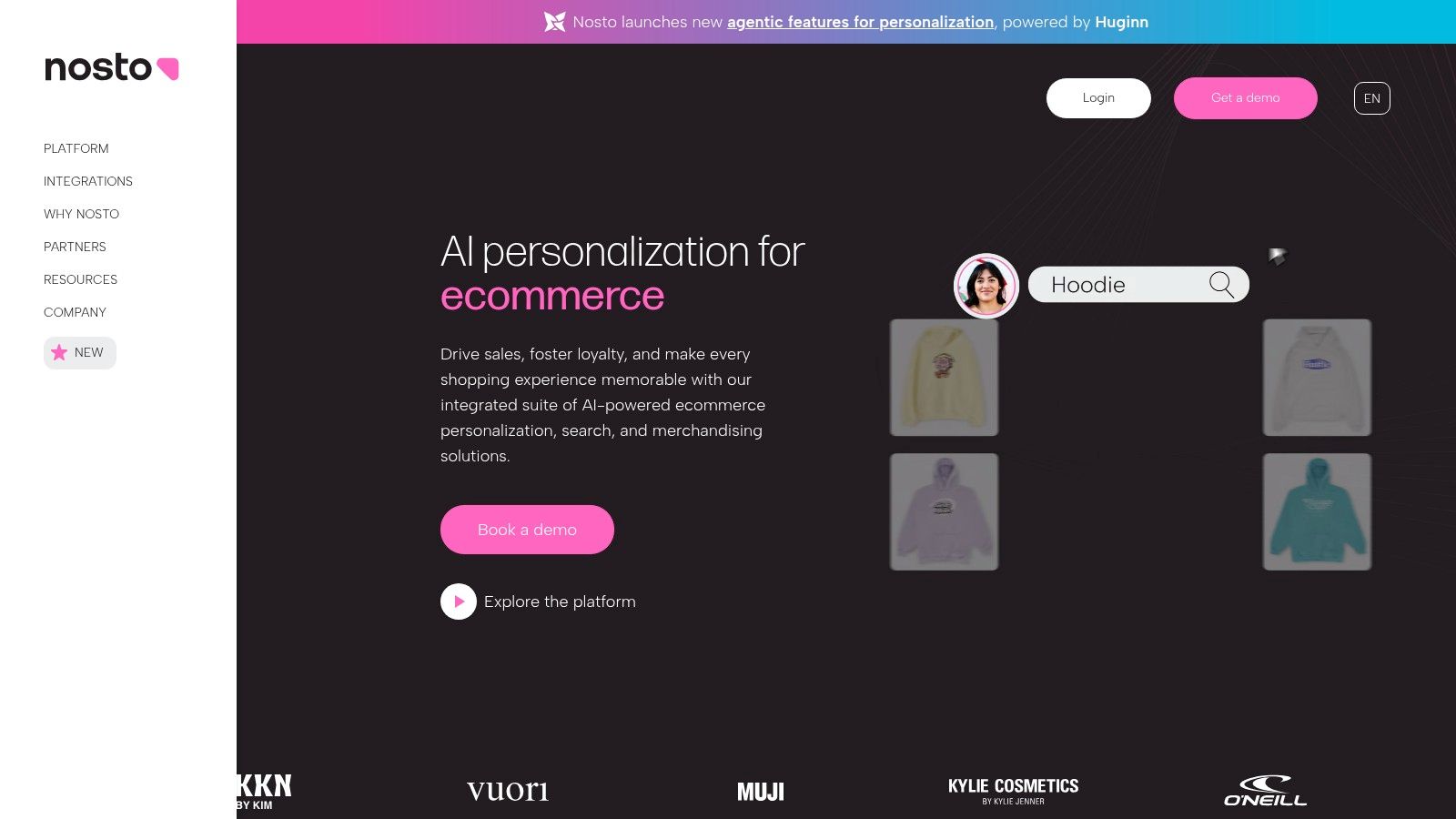
Nosto's focus on profitable discovery makes it one of the best Shopify marketing apps. Its controls allow merchants to personalize the experience and merchandise based on business goals. You can boost high-margin products in search results. This level of control is critical for scaling brands that need to manage profitability.
Key Features & Use Cases
AI Product Recommendations: Deploy personalized carousels on the homepage, product pages, and cart.
Intelligent Search: Replaces Shopify's native search with an AI-driven engine that understands user intent.
Merchandising Controls: Create rules to boost or bury products based on margin or inventory level.
Checkout & Post-Purchase Offers: For Shopify Plus users, Nosto adds one-click upsells in the checkout.
Pricing
Nosto is free to install. Its pricing is quote-based and tailored to your store's traffic and GMV. Expect a custom proposal after a demo.
Ideal for: $5M+ brands with large product catalogs that need granular control over on-site merchandising.
11. UpPromote
UpPromote is an affiliate and referral marketing app for Shopify. It gives founders the tools to launch their own partner programs. You can create custom commission structures, track performance with unique links, and automate affiliate payouts. It's a strong choice for brands building their first influencer channel.

The app makes program management straightforward. Founders can set up a self-serve portal where affiliates register and track their earnings. This removes much of the manual work. You can create different commission tiers or product-specific rates. This flexibility helps you incentivize affiliates to push certain items.
Key Features & Use Cases
Tiered & Product-Level Commissions: Set up multiple programs. Offer a 10% base commission but give top performers 15%.
Auto-Generated Links & Coupons: Each affiliate gets a unique tracking link and coupon code.
Automated Onboarding & Payouts: Affiliates sign up through a branded portal. The app integrates with PayPal for payments.
Fraud Detection: Built-in tools help identify suspicious referral traffic.
Pricing
UpPromote offers a free plan to get started. It tracks up to 200 referral orders per month. Paid plans start at $29.99/month. Some plans include a small performance fee on affiliate-generated revenue.
Ideal for: Brands spending $1k–$50k/mo on ads that want to diversify acquisition channels. Learn more about it at UpPromote.
12. Octane AI
Octane AI helps brands collect zero-party data. It does this by creating product recommendation quizzes and pop-ups. It translates customer preferences into guided selling experiences. This is powerful for stores in beauty, fashion, or gifting. The app syncs data to Shopify profiles and your marketing tools like Klaviyo.

Its focus on conversational commerce makes it a standout. Instead of guessing what a customer wants, you ask. The quiz builder allows for advanced logic, making the experience feel personal. This direct data handoff means you can immediately segment customers based on quiz answers. This creates hyper-relevant campaigns that lift conversion rates.
Key Features & Use Cases
Product Recommendation Quizzes: Build guided shopping paths that help customers find the perfect product.
Zero-Party Data Collection: Capture insights like skin type or style preference directly from the customer.
Seamless Klaviyo & Attentive Sync: Push quiz answers and new subscribers directly into your marketing channels.
A/B Testing: Optimize quiz questions and pop-up copy to maximize engagement.
Pricing
Octane AI's pricing is based on your store's revenue and quiz engagements. The "Starter" plan begins at $50/month for stores up to $1M in annual revenue. Plans scale up with your revenue.
Ideal for: Brands with complex or personal product catalogs. It’s perfect for stores that can benefit from guiding customers to the right purchase.
Top 12 Shopify Marketing Apps — Feature & Performance Comparison
The Right Tools vs. The Right System
You now have a breakdown of the best Shopify marketing apps. We’ve covered everything from email with Klaviyo to reviews with Yotpo. Each tool is powerful.
But just installing apps won't guarantee success. The real challenge for $1M–$10M brands isn't a lack of tools. It's the drag of managing them all. You can subscribe to a half-dozen apps and still feel like you're duct-taping your marketing together.
The Problem with a Disconnected Tech Stack
A common mistake is treating your tech stack like a collection of individual instruments. When your apps don't communicate, you create data silos and bottlenecks.
For example, review data from Okendo should inform segments in Klaviyo. Loyalty program engagement in Yotpo should trigger SMS flows in Attentive. Insights from Triple Whale need to translate into new ad creative. Without a unified system, these connections are manual, slow, and often missed. This friction costs you time and lost revenue.
From App Overload to an Integrated Marketing System
The goal is not to accumulate more software. The goal is to build a system where data flows freely and execution is constant. A true system turns raw data into marketing actions with minimal friction.
Here are the key principles for building your marketing system:
Centralize Your Data: Decide where your "source of truth" will live. For many, this is a tool like Triple Whale. It pulls data from all your channels into one place. This prevents you from making decisions based on conflicting reports.
Prioritize Deep Integrations: When choosing apps, look beyond the feature list. How well do they integrate with the rest of your stack? A slightly less powerful app with a seamless integration is often more valuable.
Automate Information Flow: Set up workflows that pass information between apps automatically. Prioritize apps with direct, built-in connections. For example, ensure quiz results from Octane AI automatically create new customer segments in your email tool.
Create Feedback Loops: Your marketing efforts should create a cycle of learning. Ad performance data should inform your next email campaign. Customer reviews should inspire your next UGC ad. To build an effective system, continuously seek out new e-commerce insights and adapt.
Building this system is a constant process. It requires a focus on not just what each app does, but how it works with everything else. The best Shopify marketing apps are the ones that make your entire marketing engine run faster. The ultimate aim is to spend less time managing software and more time acting on the insights it provides.
Tired of juggling ten different app dashboards just to launch a single campaign? Needle replaces the chaos. It connects your data, generates strategy, and executes your marketing for you. Get strategy, creative, and execution handled in one weekly workflow. See how Needle works.
Frequently Asked Questions
What are the must-have Shopify apps for marketing?
Every store needs tools for email/SMS marketing (like Klaviyo), reviews/UGC (like Okendo), and analytics (like Triple Whale). These three categories form the foundation of a strong marketing stack for driving and tracking sales.
How many Shopify apps are too many?
There's no magic number, but performance is a key indicator. If your site speed is slowing down or your team feels overwhelmed managing different tools, it's time to audit your stack. Aim for a lean set of apps that integrate well, rather than a large collection of single-function tools. Most 7-figure brands can operate effectively with 10-15 core marketing apps.
Can Shopify marketing apps increase my sales?
Yes, directly. Apps like Upsell.com are built to increase Average Order Value (AOV). Email and SMS apps like Klaviyo and Postscript recover abandoned carts and drive repeat purchases. Review apps like Yotpo build social proof, which boosts conversion rates. The right app stack is a direct investment in revenue growth.
Are free Shopify marketing apps worth it?
Free plans are great for testing a concept or for very early-stage stores. For example, Yotpo's free plan is a good way to start collecting reviews. However, as your brand grows, you will likely need the advanced features, segmentation, and support that only come with paid plans. Think of free plans as a starting point, not a long-term solution.