

You're a founder. You're busy. You need a marketing partner who gets it. Someone who has lived the chaos of running a DTC brand. Most agency lists are just paid directories. This one is different.
We’ve been in your shoes. We've managed the budgets and demanded the results. We know the difference between a real operator and someone selling jargon. This guide cuts through the noise. It helps you find the best ecommerce marketing agencies for your brand.
This is a list of top partners, vetted directories, and modern alternatives. We show you where to look and what to ask. Each option includes their ideal client, typical pricing, and what they do best. We also look at their process. Understanding an agency's tech stack is a key step. A great partner should know the best ecommerce marketing automation software.
This is a playbook for founders who need the right growth partner. Not just another vendor. Let's find the team that will actually move the needle for your brand.
The 12 Best Ecommerce Marketing Agencies at a Glance
| Provider | Best for | Standout | Pricing |
|---|---|---|---|
| Needle | DTC brands $1M–$10M | AI + human; uncapped creative | From $2,999/mo |
| Clutch | Shortlisting agencies | Phone-verified reviews | Free |
| UpCity | Local U.S. partners | City-level filters + recommendability score | Free |
| DesignRush | Building a broad list | Side-by-side portfolio comparison | Free |
| GoodFirms | Global agency longlists | Transparent scoring; 38,000+ agencies | Free |
| Shopify Partners | Shopify merchants | Vetted tiers (Select, Plus, Premier) | Partner-dependent |
| BigCommerce Partners | BigCommerce merchants | Certified tiers; 741+ partners | Partner-dependent |
| Adobe Partners | Enterprise / Magento | High accreditation bar | Enterprise |
| Upwork | Hiring specialists fast | Escrow + flexible contracts | Hourly or fixed |
| Mayple | Pre-vetted experts | Approve before you pay | Package-based |
| Credo | Curated agency intros | 3 hand-picked matches per brief | Free intro |
| G2 | Validating shortlists | 14,000+ providers; peer reviews | Free |
1. Needle
Disclosure: Needle is our product. We've included it because we believe it belongs here — but we're not a neutral party.
Needle is a new model for ecommerce marketing. It acts as an AI-powered marketing team in one tab. It's built for direct-to-consumer (DTC) brands that need agency-level work without building an in-house team. By mixing AI with human strategists, Needle automates the repetitive tasks. This lets experts focus on your brand and performance.
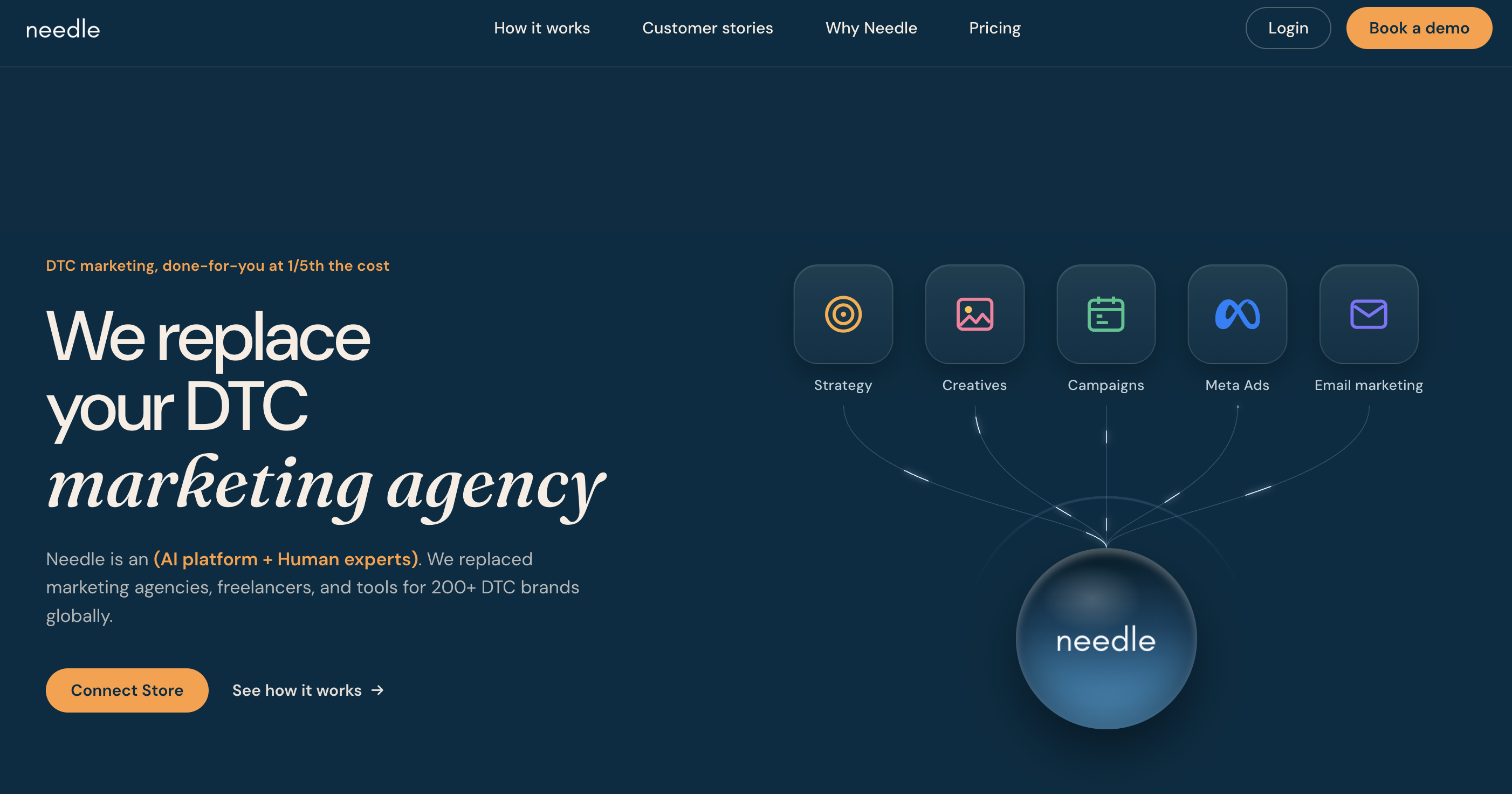
This approach makes it one of the best ecommerce marketing agencies for brands in the $1M to $10M revenue range. It connects to your Shopify, Klaviyo, Meta, Google, and TikTok accounts. It analyzes your data, then suggests a calendar of campaigns.
Show Image
Why Needle Stands Out
Needle's strength is its learning loop and breadth. The platform turns your data into a weekly calendar of campaign ideas, produces ready-to-launch emails and ad creative, and launches to Meta, Google, TikTok, and Klaviyo. Creative volume is uncapped and revisions are unlimited, so brands can react quickly to market trends.
Its pricing is a flat monthly fee set by ad spend and email list size, not a percentage of ad spend. Growth starts at $2,999/month (roughly $5–8K in monthly ad spend), Scale is $3,999/month (roughly $8–11K), and Custom pricing covers $11K+ in ad spend or more complex needs. See Needle's pricing page for details. The results are strong. Case studies show a 12x ROI on email for brands like RTPTennis.
Key Features & Differentiators:
- AI + Human Model: AI generates campaigns. A human strategist and creative team ensure quality.
- Uncapped Creative: Creative volume is uncapped and revisions are unlimited.
- Flat Monthly Pricing: One fee set by ad spend and email list size, with no percentage cut of ad spend.
- Proactive Campaigns: Get a weekly calendar of campaign ideas. Move from writing briefs to approving work.
Learn more about Needle's unique agency model and how it works.
Who Is Needle Best For?
Needle is ideal for DTC founders and marketers at brands with $1M to $10M in revenue. If you want to scale ads and email without managing agencies, freelancers, and tools separately, Needle is a solid alternative. Its first tier assumes roughly $5–8K in monthly ad spend, so it may be less suitable for very small sellers or large companies with complex needs.
2. Clutch
Best For: Shortlisting agencies based on verified client reviews.
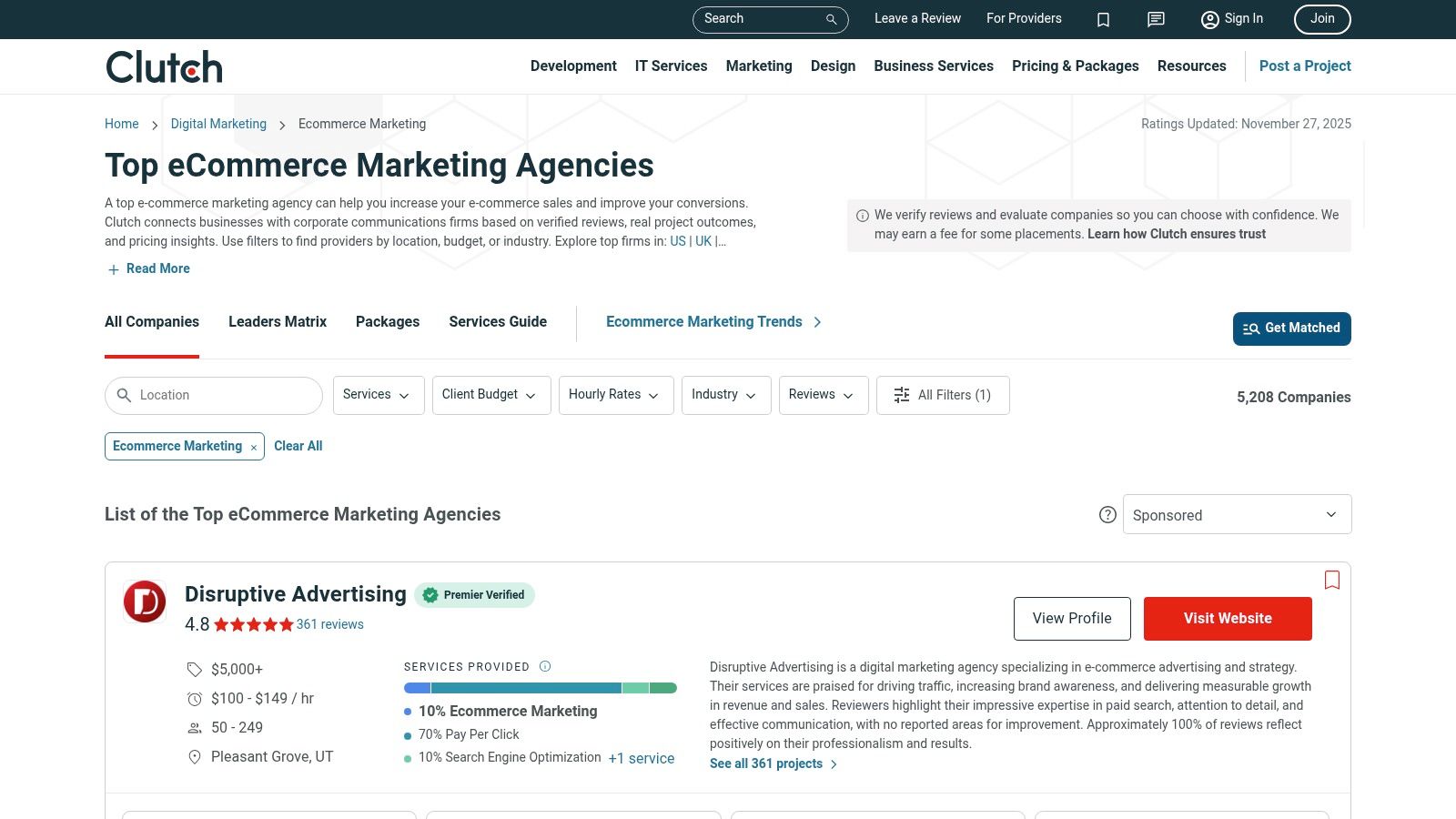
Clutch is a large B2B marketplace, not an agency. Its value is its directory of ecommerce marketing agencies. It's a key research tool for finding partners. It's backed by a strong system of verified client reviews.
The platform phone-verifies every client review. This adds a layer of trust. You can filter the listings by budget, location, team size, and even specific platforms like Shopify or BigCommerce.
Key Features & Analysis
Clutch provides a structured way to look at the crowded agency world. Its Leaders Matrix shows agencies based on their ability to deliver. This gives you a quick visual comparison. The platform is useful when you're weighing the benefits of different agency models.
- Verified Reviews: Each review includes project details, costs, and results. You get a full picture.
- Detailed Filters: Find firms that fit your needs. Filter by hourly rate or a niche marketing channel.
- Pricing Signals: Agencies list minimum project sizes and hourly rates ($50–$300+). This helps you filter by budget early on.
One drawback is that sponsored placements can affect rankings. Be sure to scroll past the "promoted" listings to see the organic results.
3. UpCity
Best For: SMBs seeking vetted, local (U.S.) marketing partners.
UpCity is a B2B marketplace. It connects businesses with service providers. While not an agency, its lists of the best ecommerce marketing agencies make it a useful tool. It's great for brands wanting a local partner. The platform uses a "Recommendability" score to rank agencies.
This score mixes digital signals, like search presence, with user reviews. It gives a better view of an agency's credibility. This helps find firms that might not have the most reviews but have a strong market presence. For businesses that value both feedback and performance metrics, UpCity is a good starting point.
Key Features & Analysis
UpCity's real strength is its U.S. local focus. If you're a brand in Chicago looking for a local team, UpCity's city lists are very helpful. Many agencies clearly list their minimum project sizes. This helps you filter out partners that don't fit your budget.
- Recommendability Score: This metric gives you a quick assessment of an agency's market authority.
- Strong Local Filters: Easily find top-rated agencies in specific U.S. cities.
- Transparent Pricing: Many profiles show minimum project costs (e.g., $1,000+) and hourly rates.
A key drawback is that some visibility is pay-to-play. Sponsored listings can get priority. Evaluate agencies on their full profiles, not just their list position. You can see how UpCity helps in shortlisting highly-rated ecommerce marketing agencies.
4. DesignRush
Best For: Building a long list of agencies and comparing portfolios.
DesignRush is a B2B marketplace to find and compare agencies. It's a useful starting point for casting a wide net. It offers a directory of ecommerce marketing agencies you can filter by service, location, and budget.
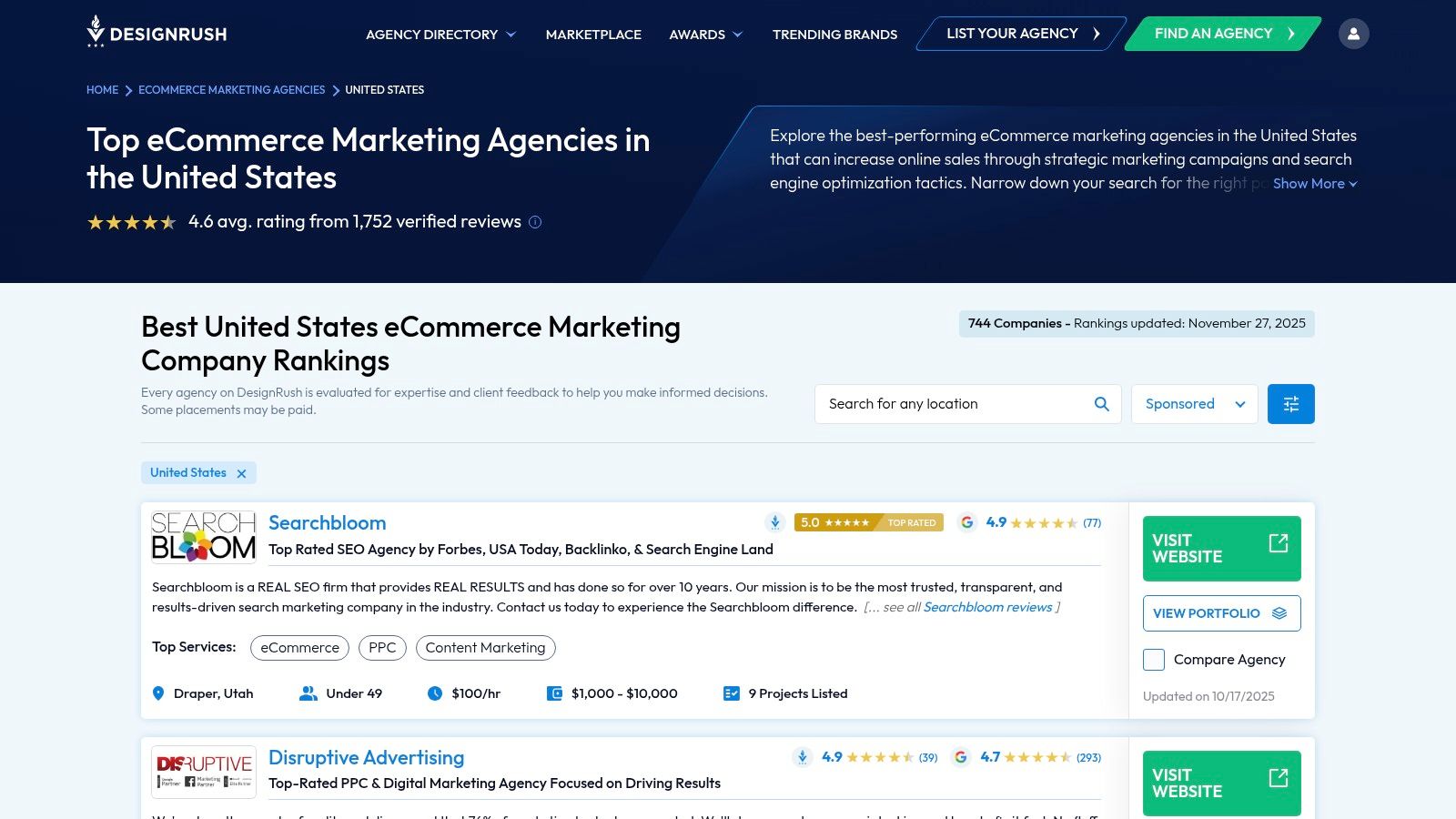
Its strength is the volume of options it provides. Agency profiles often include client lists, leader bios, and detailed service descriptions. This helps you quickly sort through partners. It makes the initial discovery phase more efficient.
Key Features & Analysis
DesignRush provides a simple way to see many options at once. This is helpful when you're just starting your search. Many of the best ecommerce marketing agencies list their specific services, like PPC or CRO. Some include sample pricing, giving you an early look at costs.
- Agency Comparison Tool: Select multiple agencies to view their profiles side-by-side.
- Detailed Profiles: Profiles often highlight awards, key clients, and team size.
- Pricing Transparency: Many agencies list their minimum project size and hourly rates typically ranging from $100 to $300+.
A big downside is the platform's reliance on paid placements. Sponsored agencies can get pushed to the top. The review process is also less clear than other platforms. It's smart to double-check any testimonials.
5. GoodFirms
Best For: Building a large, initial list of agencies with clear ranking factors.
Like Clutch, GoodFirms is a B2B review platform. It's not a direct service provider. Its strength is its large directory of digital marketing companies. You can filter to find firms that focus on ecommerce.
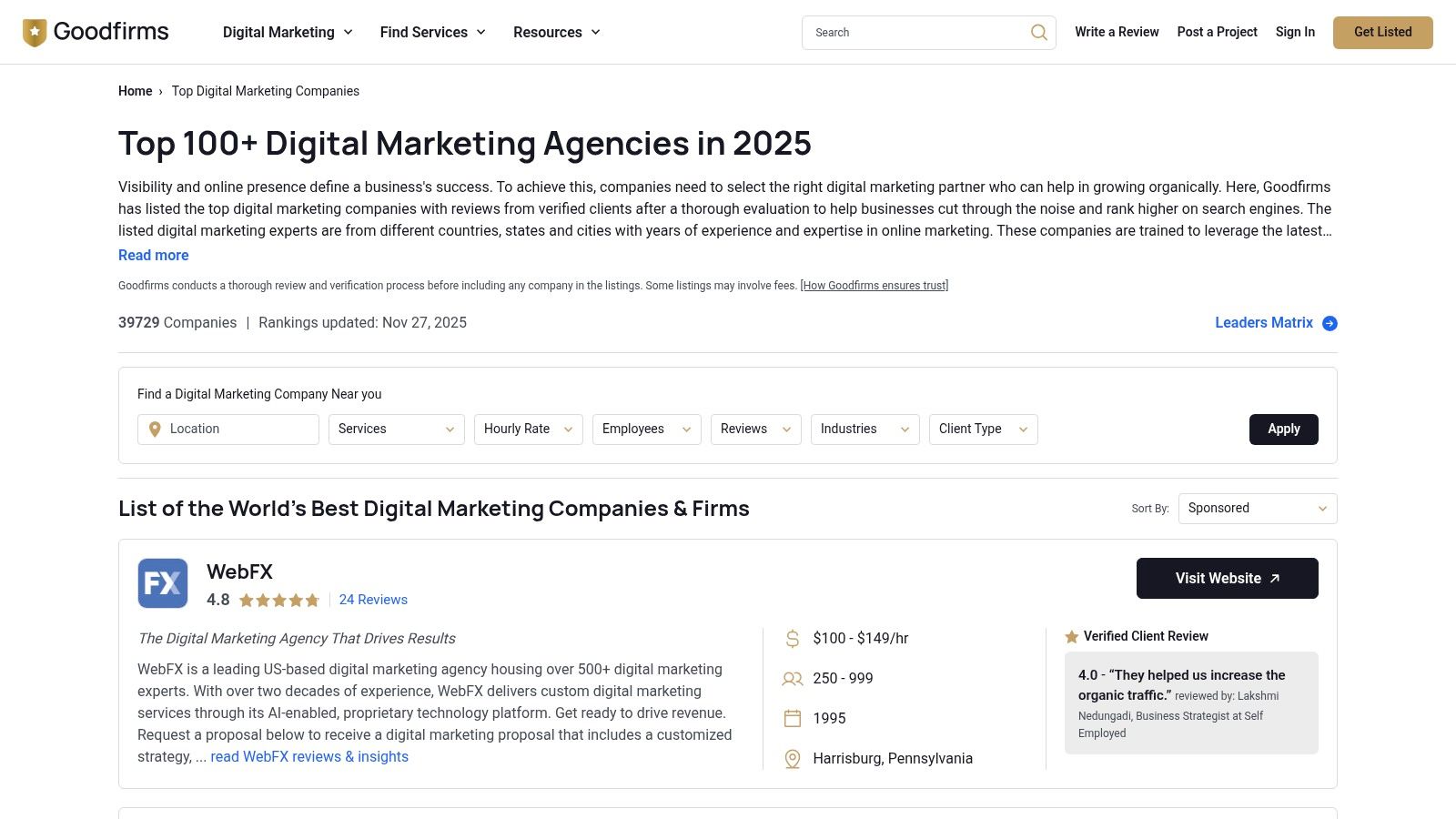
The platform provides a broad, global overview of agencies. It is also transparent about its ranking method. It scores firms based on reviews, market presence, and portfolio. This gives you a clear idea of why a company is at the top. This approach helps you build a long list of partners to check out.
Key Features & Analysis
GoodFirms helps you organize an otherwise chaotic search. While its "digital marketing" category is broad, the filters let you find companies with specific skills like Amazon PPC. This makes it a solid tool for finding niche specialists you might not find elsewhere.
- Transparent Method: GoodFirms explains its scoring system. It's based on quality, reliability, and ability.
- Broad Coverage: The platform lists over 38,000 agencies globally, offering a huge pool of potential partners.
- Detailed Filters: You can search by hourly rates (<$25 to $300+), location, and specific services.
The main drawback is its wide scope. You will need to manually check that agencies have deep ecommerce experience. Some profiles can be less detailed than on other sites.
6. Shopify Partner Directory
Best For: Shopify store owners who need vetted experts with platform-specific experience.
For brands on Shopify, the official Partner Directory is the most direct way to find a marketing partner. This is a curated ecosystem of agencies and freelancers vetted by Shopify. They understand the platform inside and out. It's the go-to resource for specialists in paid media, email, and conversion rate optimization.
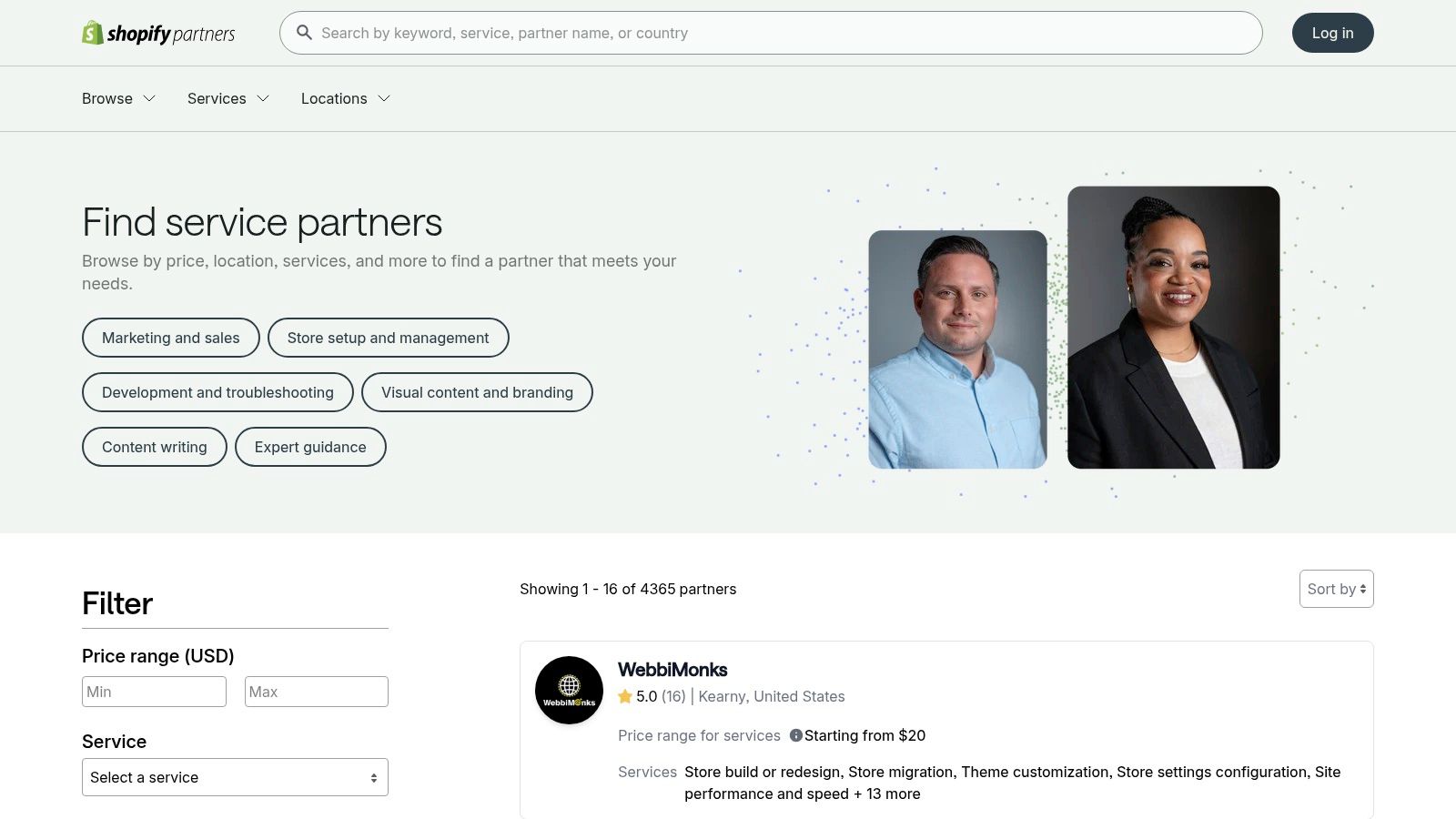
The directory's main advantage is trust. Partners are tiered based on their performance. Levels like Select, Plus, and Premier show a deeper level of expertise. This system helps you quickly find top-tier agencies with a proven track record. Shopify now hosts more than 5.5 million merchants across 175 countries, and the Partner Directory's 5,200+ service partners reflect that scale.
Key Features & Analysis
The Shopify Partner Directory simplifies the search for the best ecommerce marketing agencies. You can filter by service, price, location, industry, and language. This makes it efficient to find partners who specialize in your niche.
- Platform-Vetted Partners: Shopify's vetting provides a baseline of quality that generic directories can't match.
- Detailed Partner Profiles: Each listing includes client reviews, portfolio examples, and starting prices.
- Specific Service Filters: You can search for precise skills like "Search engine optimization (SEO)" or "Email and SMS marketing."
The main limitation is its singular focus. If your store runs on another platform, this directory won't work. Also, the top "Premier" partners are often in high demand and may have high minimum retainers.
7. BigCommerce Agency Partner Directory
Best For: BigCommerce merchants seeking marketing partners with verified platform expertise.
If your store is on BigCommerce, its official Agency Partner Directory is your best bet. This is a curated network of agencies certified to work in the BigCommerce ecosystem. They understand the platform's unique features and API.
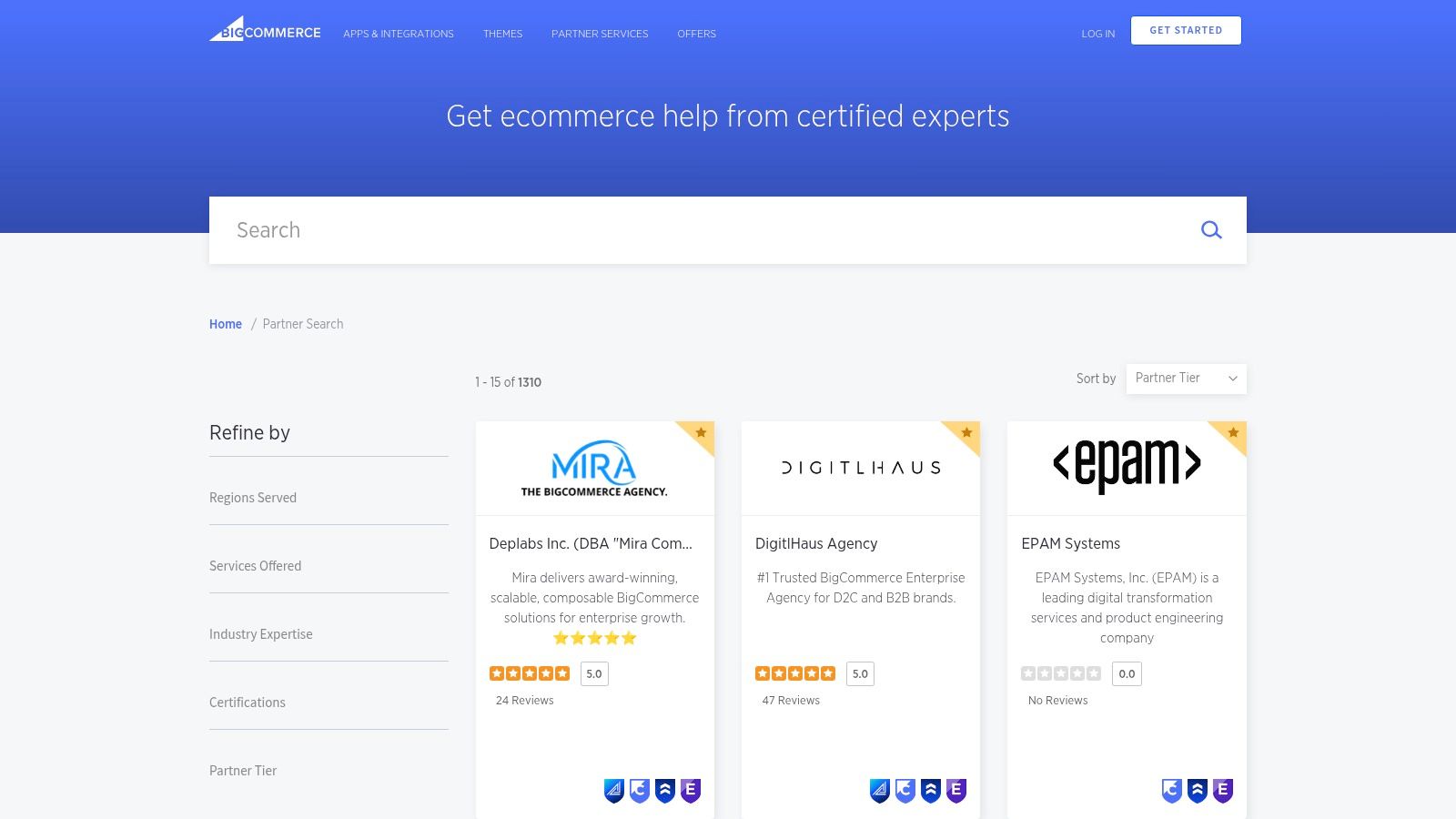
The directory helps you find experts in marketing, SEO, PPC, and CRO. They won't need a learning curve to navigate your tech. This targeted approach saves you from vetting agencies that lack platform-specific experience.
Key Features & Analysis
The directory's main strength is its trust signals. Partner tiers (like Elite and Preferred) show an agency's experience with BigCommerce clients. This helps you quickly identify top performers. The directory currently lists 741+ certified partners.
- Platform Certifications: All listed partners are officially certified. They have passed BigCommerce's standards.
- Detailed Partner Profiles: Each agency profile includes their tier, key services, and client reviews.
- Targeted Filters: You can easily filter by service, region, and industry expertise.
The primary limitation is its exclusivity. If you don't use BigCommerce, this directory is not for you. You also still need to do your own due diligence to ensure an agency is the right fit.
8. Adobe (Magento) — Find an Adobe Commerce Partner
Best For: Enterprise brands needing certified experts for complex Adobe Commerce (Magento) projects.
Adobe's partner directory is a curated list of Solution Partners. They are vetted for their expertise in Adobe Experience Cloud products, including Adobe Commerce (formerly Magento). This is for mid-market and enterprise businesses with complex catalogs or B2B needs.
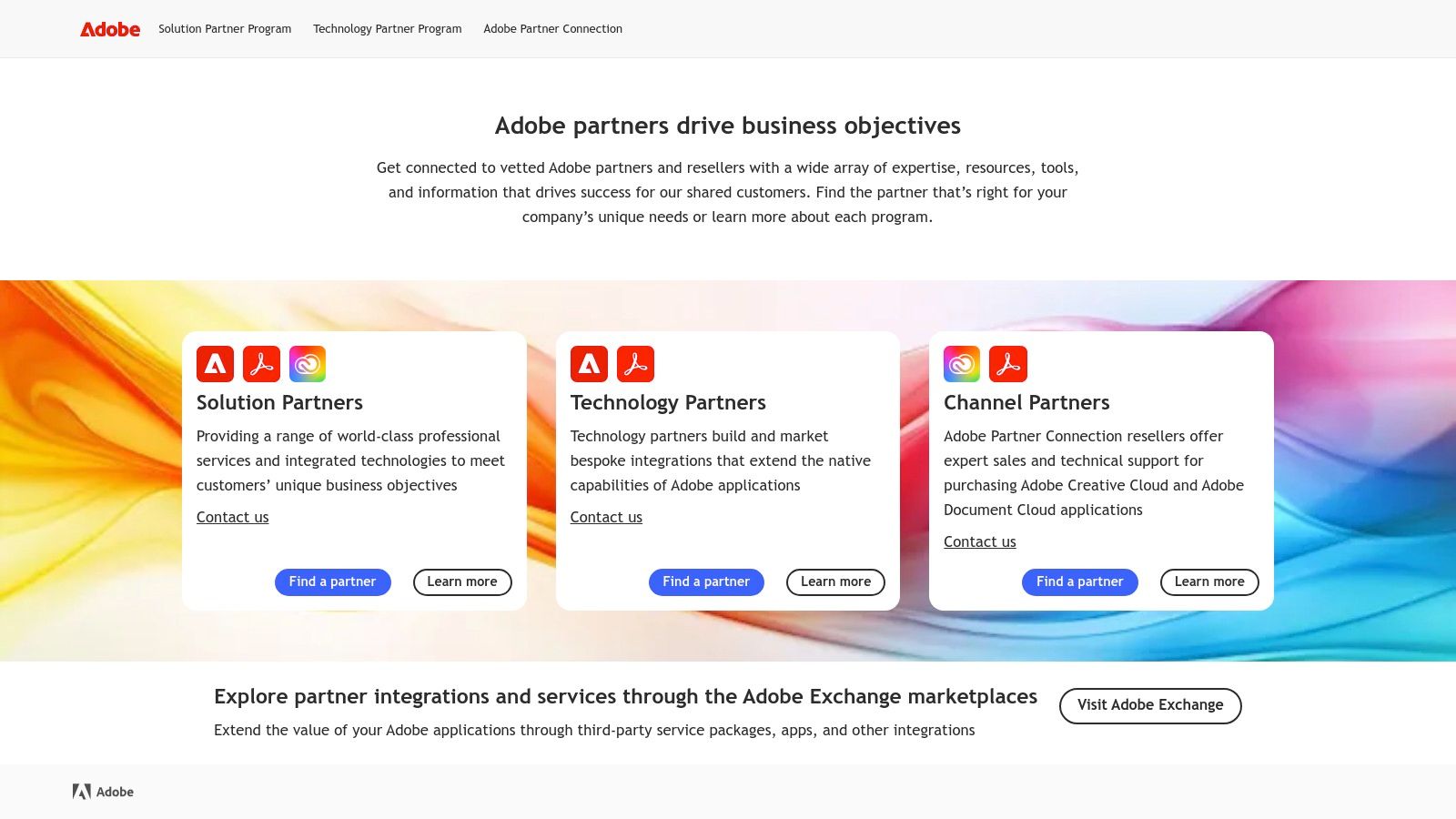
The value here is the high barrier to entry. Partners must have specific accreditations. This ensures they have proven technical skills. It's for businesses needing firms that can handle large-scale builds. You are browsing the best ecommerce marketing agencies for one of the most robust platforms.
Key Features & Analysis
Adobe's directory connects you with partners who know its ecosystem. If your business is invested in Adobe's tech, finding a partner here ensures a deep understanding of the platform. This is critical for complex marketing strategies.
- Certified Expertise: Partners are tiered (Bronze, Silver, Gold, Platinum). This indicates an agency's investment and skill.
- Specialization Filters: You can search for partners with specific specializations, like Adobe Commerce or Marketo Engage.
- Enterprise-Grade Focus: The directory is skewed toward agencies that serve larger businesses with significant budgets.
The main drawback is that it's built for those already in the Adobe ecosystem. It's not a discovery tool for platform-agnostic brands.
9. Upwork
Best For: Hiring individual specialists to augment your in-house team.
Upwork is a large marketplace connecting businesses with freelancers. It provides direct access to a global talent pool for specific marketing needs. It's ideal for brands that need to scale a marketing function quickly without a full-service agency retainer.
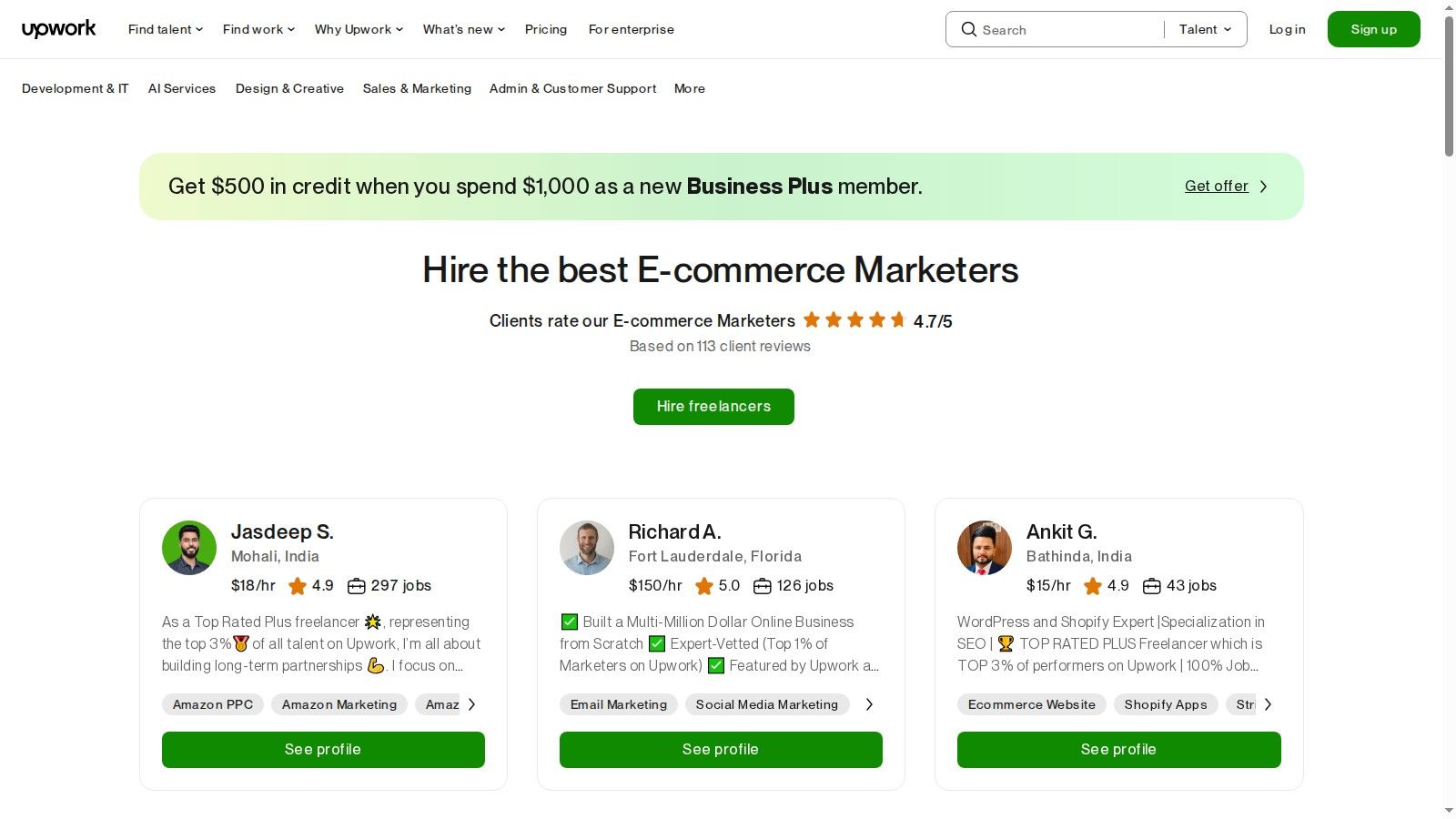
The platform lets you post a job and receive proposals quickly. You can hire for hourly or fixed-price contracts. This gives you flexibility. This direct-access model is perfect for brands that know what they need and prefer a hands-on approach.
Key Features & Analysis
Upwork offers speed and cost-effectiveness. But it puts the burden of vetting on you. The platform's Job Success Score and work histories are crucial for evaluation. For roles like managing paid social, you need to decide between a freelancer and an agency. You can explore the pros and cons of freelancers versus agencies to see what fits your stage.
- Fast Sourcing: Post a job and often get proposals from qualified marketers the same day.
- Flexible Pricing: Engage talent on an hourly or fixed-price basis. Control your budget. Project costs typically range from $500–$8,000 depending on scope.
- Built-in Safeguards: Features like payment escrow offer a layer of security.
The primary drawback is the time needed for vetting. Marketplace ratings can be inconsistent. It's critical to conduct interviews and check portfolios. Consider a small trial project before committing to a larger one.
10. Mayple
Best For: Brands that want pre-vetted freelance experts without a long-term commitment.
Mayple is a managed marketplace. It connects ecommerce businesses with top marketing specialists. It's a platform that vets and matches you with talent. It provides quality control that you wouldn't get from an open marketplace. This model gives you access to expertise without the high overhead of a full-service firm.
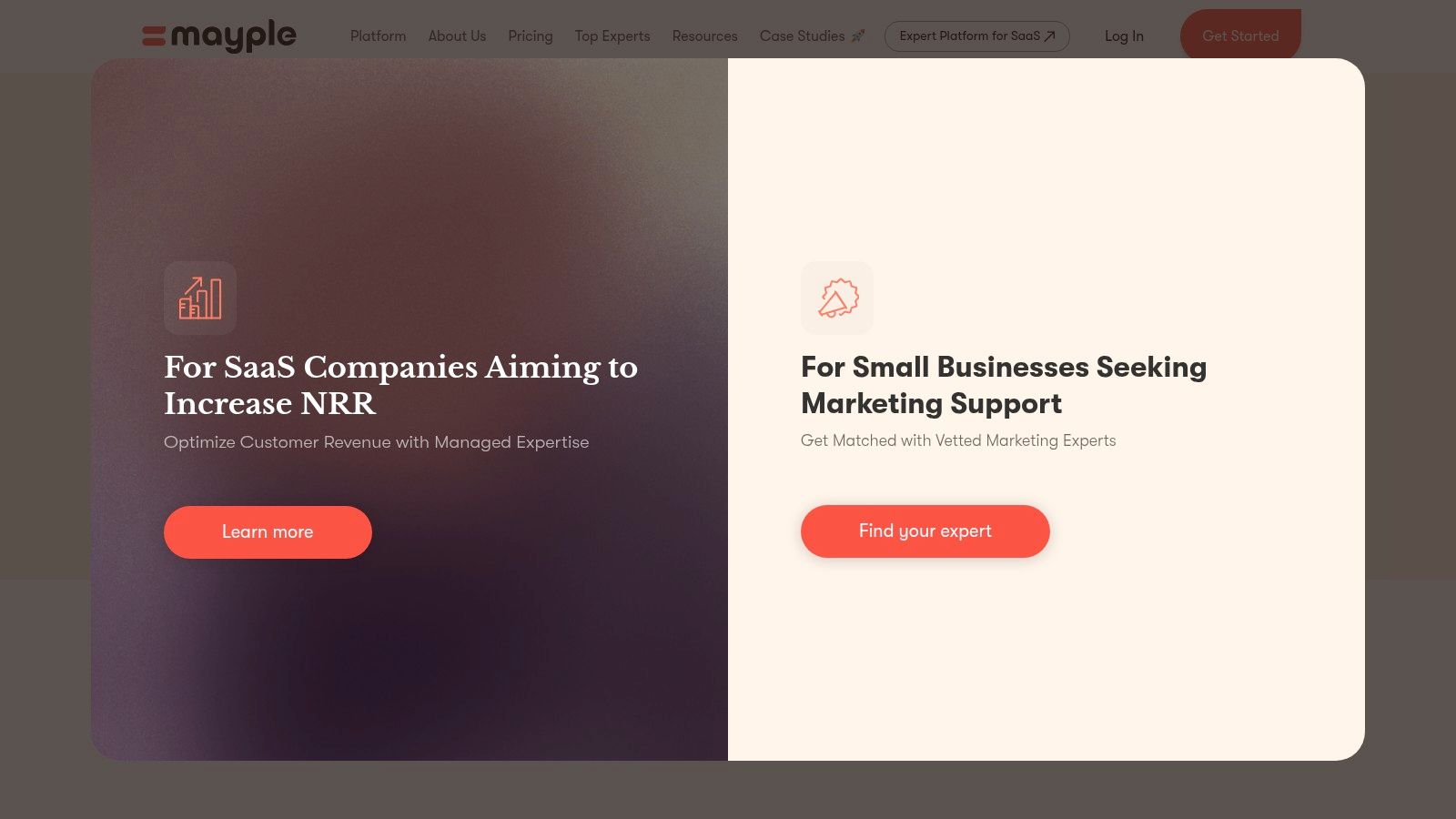
The platform's strength is its matching process. Mayple analyzes your brand's needs and goals to recommend an expert. This saves you time sifting through applications. It's a faster way to find one of the best ecommerce marketing agencies or freelancers for a specific channel.
Key Features & Analysis
Mayple de-risks hiring external marketing help. Their "approve the expert before you pay" policy and easy cancellation terms give brands flexibility. If the initial match isn't perfect, they will find a replacement. This is a big advantage over a long-term agency contract that isn't working.
- Vetted Experts: Mayple uses a data-driven process to vet every marketer.
- Ongoing Oversight: The platform provides continuous monitoring of your expert's performance.
- Clear Packages: Pricing is transparent, with pre-scoped packages for services like paid media or email marketing.
The main drawback is that the package-based structure can be less flexible than a custom plan from a traditional agency.
11. Credo
Best For: Getting curated introductions to vetted agencies, saving time on screening.
Credo is a matchmaking service. It connects businesses with pre-screened marketing agencies. Instead of a large directory, it offers a guided process. You submit your project details and get a curated list of partners who fit your scope and budget. This is ideal for busy founders who want to skip browsing.
The platform focuses on vetting. It ensures every agency in its network meets specific standards. The process starts with a detailed form where you outline your needs. Credo's team then hand-picks and introduces you to three of the best ecommerce marketing agencies for your project.
Key Features & Analysis
Credo's primary value is the time it saves and the risk it reduces. The team helps you define your project scope and budget. This prevents mismatched proposals later. This hands-on guidance is helpful for brands hiring an agency for the first time. Credo has served 6,500+ companies since 2013 and reduced typical agency hiring time from 8–12 weeks to 3–5 weeks.
- 1:1 Matching: You receive introductions to a small, relevant set of agencies.
- Pre-Vetted Network: Agencies are screened through a 28-point vetting process for their track record, skills, and expertise.
- Broad eCommerce Coverage: The network includes specialists across key channels, including SEO, paid social, and PPC.
The main limitation is the smaller pool of agencies compared to open directories. If you prefer to do your own research, Credo's process might feel restrictive. It's built for those who value curation.
12. G2
Best For: Cross-validating agency choices using peer-sourced reviews.
G2 is known as a software review site. It also has a directory for digital marketing services. For ecommerce brands, it's a good secondary source to validate potential partners. Its value comes from getting another perspective, especially for larger firms.
The platform's strength is its massive user base. This attracts a high volume of peer reviews. This allows you to get a broad sense of an agency's reputation. While its filters aren't as specialized for ecommerce as Clutch's, you can still narrow down providers by industry and company size. G2's digital marketing services category tracks nearly 14,000 providers, with ratings averaged across 6,500+ verified reviews.
Key Features & Analysis
G2 is most effective as a final checkpoint. If you have a few agencies in mind, checking their G2 profiles can reveal pros and cons from past clients. Its review policies and fraud detection add credibility to the feedback.
- Aggregated Feedback: Quickly scan "what users liked" and "what users disliked" sections.
- Broad Coverage: You can find reviews for a wide range of services.
- Brand Recognition: The G2 brand carries weight, making the reviews a trusted data point.
A key limitation is that its service categories are broad. Many listings focus more on an agency's software knowledge than on their impact on retail outcomes. You'll need to read reviews carefully to find relevant information.
Frequently Asked Questions
What does an ecommerce marketing agency do?
An ecommerce marketing agency helps online stores grow. They manage tasks like paid advertising (Meta, Google), email marketing, SEO, and social media. Their goal is to drive traffic, convert visitors into customers, and increase customer lifetime value. The best agencies don't just execute — they bring strategic insight to each channel, compounding results over time instead of running one-off campaigns.
The difference between a good agency and a great one often comes down to how they report: weekly, plain-language updates tied to revenue are the standard you should expect.
How much do ecommerce marketing agencies cost?
Costs vary widely by model and scope. For brands doing $1M–$10M in revenue, expect monthly retainers between $5,000 and $15,000/month from traditional full-service agencies. Boutique agencies and specialists typically start between $2,500 and $5,000/month. Managed marketplaces like Mayple and matching services like Credo sit in the middle.
AI-powered models like Needle start from $2,999/month, priced by ad spend and email list size. Percentage-of-spend models (where agencies charge 10–20% of your monthly media budget) are also common in paid media, and can add up quickly on large ad budgets. Always ask what the retainer actually covers — creative production is often billed separately.
What should I look for when hiring an agency?
Look for three things. First, relevant experience: have they worked with brands similar to yours in size and industry? Ask for case studies with real numbers, not vague claims. Second, clear communication: do they have a structured process for reporting and meetings?
According to the 2026 AgencyAnalytics Benchmarks Report, 55% of clients say their biggest frustration is agencies that can't clearly connect marketing activity to revenue — a good agency solves this from week one. Third, cultural fit: do they feel like an extension of your team? The best partnerships are built on trust and shared goals, not just deliverables.
Agency vs. freelancer: which is better for ecommerce?
It depends on your needs and stage. Freelancers are great for specific, well-defined tasks — for example, hiring an email marketing specialist for a one-time flow build. They are often more affordable and faster to engage. Agencies are better for integrated strategies that span multiple channels. They bring a broader team and more resources, but come with higher costs and longer commitments.
A third option — managed marketplaces like Mayple or AI-powered agencies like Needle — sits between the two: you get agency-level output and strategic oversight without building out a full in-house team. Needle's first tier assumes roughly $5–8K in monthly ad spend, so check fit before committing.
How long before I see results from an ecommerce marketing agency?
Early signals — click-through rates, open rates, early ROAS — typically appear within the first 30 days once campaigns go live. Expect a 4–6 week ramp-up first, covering onboarding, account access, and initial creative production. Meaningful attribution trends take 60–90 days to develop, especially when creative testing is involved.
Be skeptical of agencies that promise strong results in the first two weeks — early ROAS spikes often reflect warm retargeting audiences that exhaust fast. Evaluate properly after one full quarter of consistent data.
What channels should an ecommerce marketing agency cover?
At minimum: paid social (Meta), email (Klaviyo or similar), and Shopify analytics. Higher-growth brands benefit from Google Ads, TikTok, SMS, and influencer in the mix as well. The more channels an agency manages from one integrated system, the less coordination work falls on your team — and the more their strategies compound across channels.
Ask any agency how they coordinate between paid social and email; siloed execution between channels is one of the most common ways brands leave revenue on the table.
The Right Partner Is an Extension of Your Team
Choosing from a list of the best ecommerce marketing agencies is just the start. The real work is now. You're not just outsourcing tasks. You're trusting a critical part of your business to an external team. The goal is to find a partner who acts like a co-founder.
This article showed you a dozen paths to find that partner. We covered everything from big directories like Clutch to specialized platforms like Mayple. We also looked at marketplaces like Upwork and the partner directories from Shopify and BigCommerce. Define your need first, then find the platform that serves it.
Key Takeaways: How to Make Your Final Decision
Don't get stuck. The right partner exists. But finding them requires a structured approach. The biggest mistake founders make is rushing the vetting process. Here's a final checklist to guide you:
Define Your "One Thing": What is the single most important result you need? Is it a lower Customer Acquisition Cost (CAC)? A higher Customer Lifetime Value (LTV)? Be specific. An agency that does "everything" often excels at nothing.
Verify Their Niche Expertise: Selling fashion is different from selling supplements. Ask for case studies from brands like yours. A great agency will have deep, vertical-specific knowledge. They know your customer's language.
Check Their Process: How do they communicate? What does onboarding look like? A lack of a clear process is a major red flag.
Understand the "Who": You might talk to the agency owner, but will you work with them or a junior manager? Ask who will manage your account and what their direct experience is. You are hiring the people, not the brand.
The Real Cost: Beyond the Retainer
Finally, think beyond the monthly fee. The true cost of a bad agency is lost opportunity. Six months of flat growth and wasted ad spend can be fatal for a growing brand. The right partner is an investment that pays for itself.
They don't just execute. They challenge your ideas. They operate with the same urgency you do. Their success is tied to yours.
Whether you choose an agency, a freelancer, or a modern model like Needle, the principle is the same. You need a true partner. Someone who will dive into your data and work tirelessly to solve your problems. Choose with care. Your growth depends on it.
→ See how Needle works — and get a free strategy report showing what's leaving money on the table.