Illustrative concepts built from public data only. With your assets connected, our delivered creatives go further.
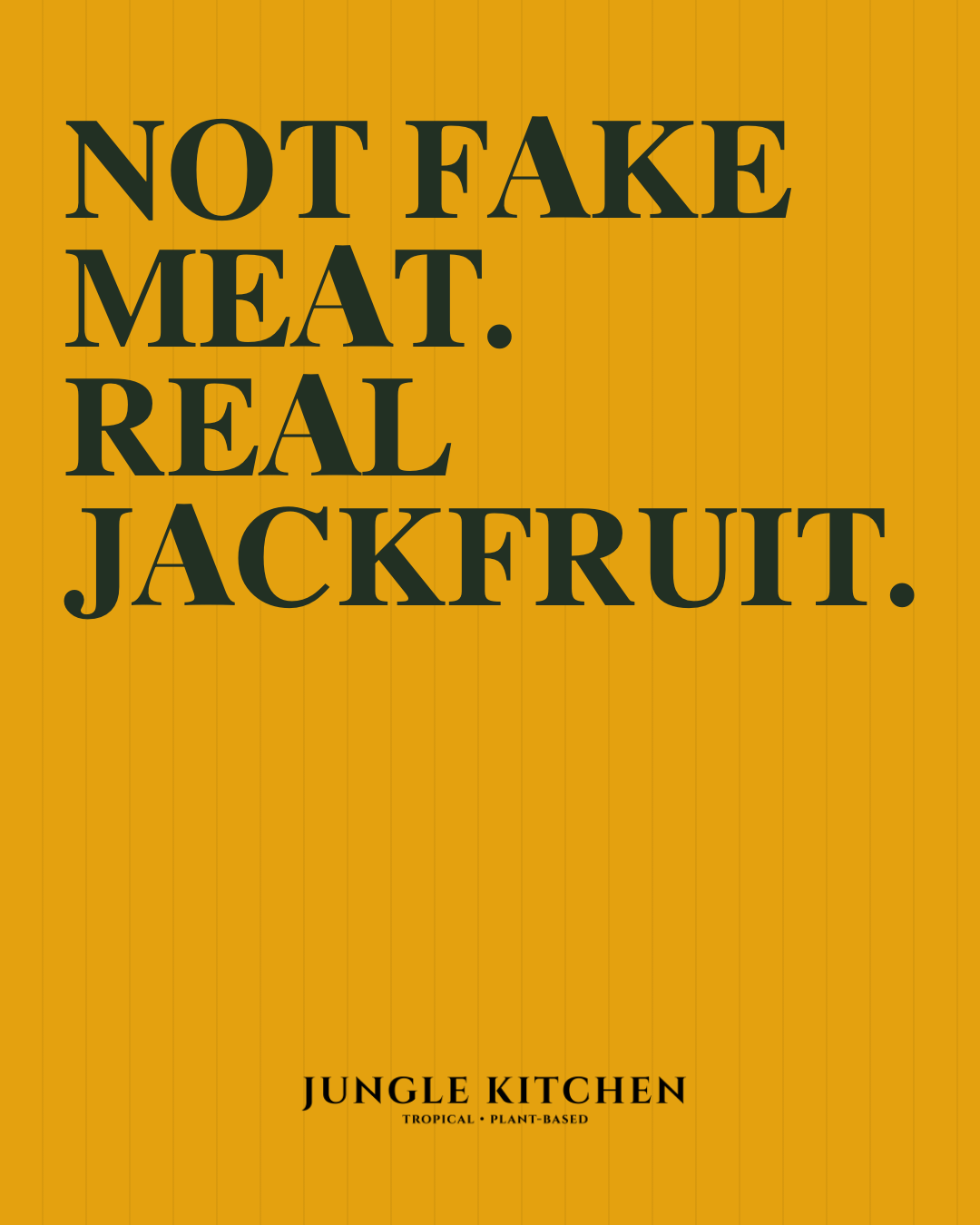
Your edge is to reject the fake-meat category, not join it. So we say it in your own bold type and name the hero ingredient: not fake meat, real jackfruit. It reframes Jungle Jack as real food before a single spec is read.
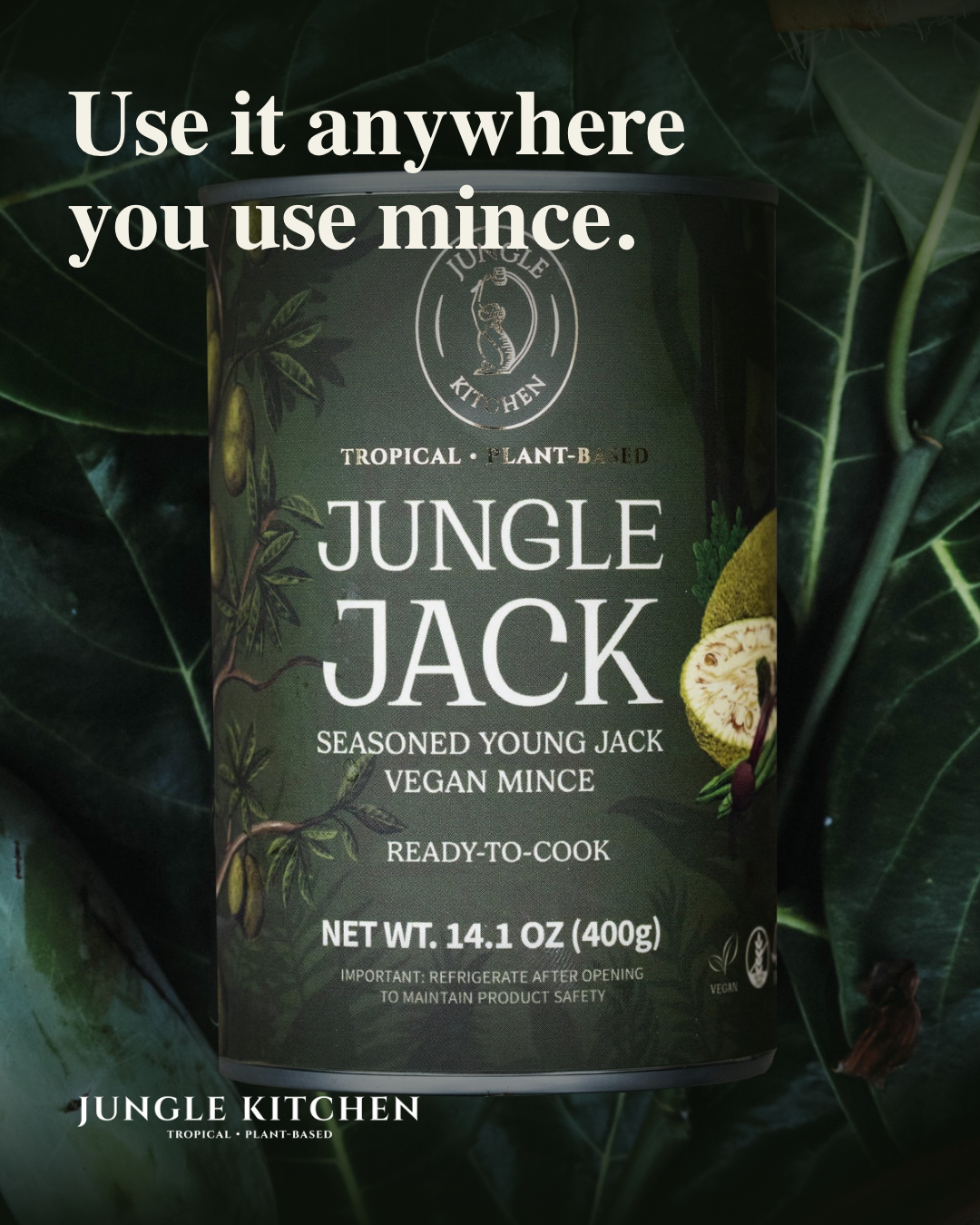
Your flagship hook is practicality, not veganism. Use it anywhere you use mince, over the real tin, tells a flexitarian this fits pasta, tacos and bowls tonight, no identity required.
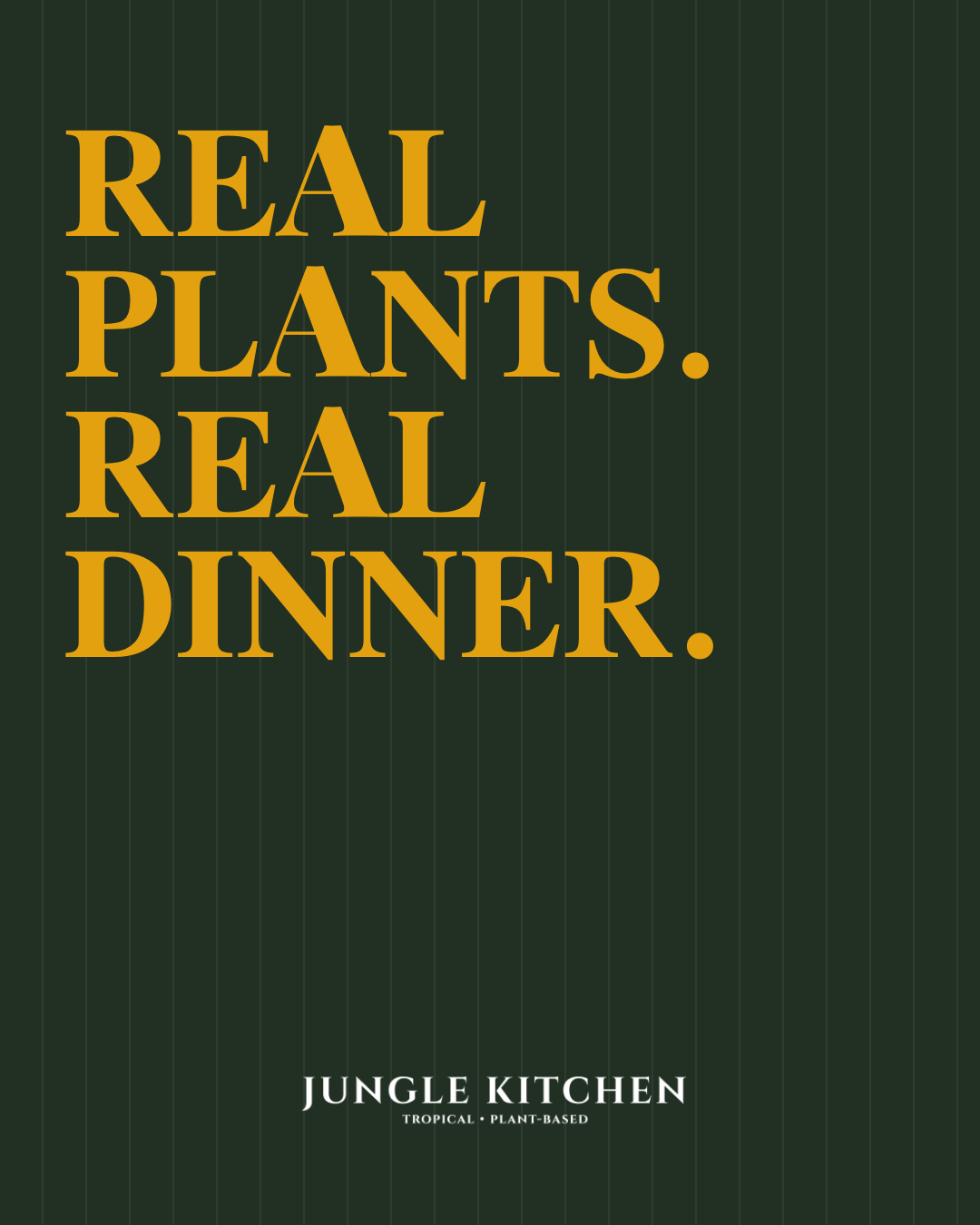
Your proof is whole plants, not lab protein. Real plants, real dinner, frames it as actual food you cook with, not a wellness novelty, and skips the clean-and-sustainable jargon the whole category overuses.
The read on your brand behind every frame: what you've earned, the honest gaps, and the lane only you can own.
You have an ingredient world competitors cannot copy: Sri Lankan young jackfruit, moringa, kohila, ash plantain, banana blossom, coconut, tamarind and heritage spices. That is a far more ownable pantry than generic pea or soy alt-meat. Jungle Jack is a credible flagship because it has both clarity and story: plant-based mince you can use anywhere mince does, 18 whole plant ingredients, no seed oils, no fillers, no preservatives, so a flexitarian never has to identify as vegan. Your sourcing carries real emotional weight, small farm-holders, regenerative agriculture, traceability, women-led supply, fresh batch production from Sri Lanka, which justifies premium pricing better than an abstract sustainable badge. The range builds baskets, from Coconut Sambol, Jungle Fire or Jack and Tomato Pasta Sauce into Jungle Jack, Jackseed Masala and Raw Jungle. And customers already lead with pleasure, depth of flavour, fresh, sweet and spicy, replacing beef because it is delicious.
Here is the honest part. The flagship has a convenience gap: the 6-pack preorder and 4 to 6 week ship from Sri Lanka build freshness and small-batch trust, but they create friction for anyone trying to solve dinner this week. Your best proof is under-leveraged, regenerative sourcing, small farm-holders, traceability and a women-led supply chain need to show up in performance content through farm stories, harvest dates and batch detail, not just brand copy. The range spans ready-to-cook, ready-to-eat, spices, sugars and wellness powders, which is rich but can confuse navigation, each product needs a clearer funnel role. Price resistance is real, with items at S$9 to 16 and Raw Jungle at S$88, value needs framing around meal count, ingredient density and versatility, not aesthetics alone. And the brand risks sounding like the whole wellness category if it overuses clean, sustainable, healthy or vegan, your sharper edge is tropical whole-plant food with heritage flavour and traceable sourcing.
Beyond, Impossible and Jack and Annie's win on familiarity and distribution. Artisanal spice and wellness brands crowd the clean-and-sustainable language. The lane only you can own is to refuse to be another fake-meat brand and own tropical whole-plant cooking for flexitarians, bold enough for food lovers, clean enough for wellness buyers, practical enough for a weeknight. Your belief is that eating more plants should feel abundant, flavourful and rooted in real food culture, not a compromise or a substitution. Your edge is a pantry built on hard-to-genericize ingredients, Sri Lankan young jackfruit, heritage spices, small-batch tins, clean-label with no seed oils, fillers or preservatives, and a sourcing story of people and place. Not fake meat, jungle meat. Bring the jungle into everyday kitchens as the most flavourful way to eat more whole plants. That is the flag.
Jungle Kitchen is in the hardest part of plant-based: convincing people who are not necessarily vegan to change what goes into everyday meals. The audience is curious but impatient, price-sensitive, and trained by supermarket alt-meat to expect instant availability and familiar formats. The real job is not selling a tin of jackfruit mince; it is proving that tropical, whole-plant pantry food can become a weekday habit rather than a premium novelty. Pressure comes from two sides: scaled plant-based meat like Beyond, Impossible, The Jackfruit Company and Jack and Annie's, who win on familiarity and distribution; and artisanal condiment, spice and wellness brands using the same clean-and-sustainable language. In the US and Singapore the category is full of plant-based, clean and better-for-you, so those words alone will not carry you. You break away by refusing to behave like another fake-meat brand: young jackfruit from Sri Lanka, use anywhere mince does, 18 whole plant ingredients, no seed oils, no fillers, no preservatives, small-farm sourcing, regenerative agriculture, a women-led supply chain, and a pantry that moves from Jungle Jack to Coconut Sambol, Jackseed Masala, Jungle Fire, Ceylon Cinnamon and Raw Jungle. Own tropical whole-plant cooking for flexitarians.
Jungle Kitchen's core belief is that eating more plants should feel abundant, flavourful and rooted in real food culture, not a compromise or a fake-meat substitution. The functional edge is a tropical whole-plant pantry built on hard-to-genericize ingredients, especially Sri Lankan young jackfruit, heritage spices, small-batch tins and clean-label formulations with no seed oils, fillers or preservatives. The emotional connection is discovery with trust: customers feel they are bringing something vivid, ethical and genuinely nourishing into their kitchen.
| Pillar | Core message |
|---|---|
| Not Fake Meat. Jungle Meat. | Jungle Jack gives flexitarians the comfort of mince without the ultra-processed baggage: 18 whole plant ingredients, no seed oils, no fillers, and a texture built for pasta, tacos, stir-fries, bowls and curries. It makes meat reduction practical, not preachy. |
| Tropical Pantry, Weeknight Ready | Heritage tropical ingredients as everyday shortcuts: Coconut Sambol for instant brightness, Jungle Fire for heat, Jack and Tomato Pasta Sauce for comfort, Jackseed Masala for a fast curry-style meal. Adventurous food without starting from scratch. |
| Traceable From the Jungle | The sourcing story is a reason to believe, not a badge: young jackfruit from Sri Lanka, small farm-holders, regenerative agriculture, fresh batch production and a women-led supply chain. Premium pricing connected to people, place and process. |
Maya, 34, brand manager, Singapore. Wants flavourful weeknight meals that feel healthier without becoming restrictive; swaps meat out a few nights a week but refuses bland vegan substitutes; discovers through Instagram recipes, founder stories and boutique grocers. Flexitarian, busy, taste-first.
Daniel, 41, wellness-conscious parent, California. Values clean labels and ingredient transparency; reads nutrition panels, avoids seed oils and preservatives, and pays more when sourcing feels credible; discovers through wellness newsletters and food creators. Label-reader, pragmatic, health-led.
Aisha, 27, food explorer, New York. Uses food as cultural discovery and loves tropical, spicy, sweet-savoury flavours; buys condiments, sauces and spices to upgrade simple meals and share finds; discovers through TikTok cooking clips, pop-ups and Asian pantry shops. Adventurous, social, flavour-obsessed.
| Stage | Product | Angle |
|---|---|---|
| Discovery | Coconut Sambol | Low-friction flavour trial: a ready-to-eat tropical relish that instantly upgrades rice bowls, toast, curries and plant-based dinners. One spoon, whole dinner wakes up. |
| Consideration | Jungle Jack | The flagship conversion product: whole-plant mince from young jackfruit, built to replace mince in familiar recipes with no seed oils, fillers or preservatives. Use it anywhere you use mince. |
| Purchase | Jungle Jack 6-pack preorder | A batch-based pantry commitment for believers: around 30 meals of fresh, farm-to-pantry plant-based mince with better value. Stock your next 30 plant-based meals before the batch sells through. |
| Generic and weak | Strategic and strong |
|---|---|
| Delicious plant-based meat alternative. | Young jackfruit mince for the nights you want to skip meat, not flavour, 18 whole plant ingredients, no seed oils, no fillers, ready for whatever you usually make with mince. |
| Clean, sustainable pantry staples. | A tropical pantry from small farm-holders and real ingredients: Sri Lankan jackfruit, Coconut Sambol, Ceylon Cinnamon, Jungle Fire, spices with a story you can trace. |
| Healthy vegan meals made easy. | No vegan identity required. Just bold tropical flavour, whole plants and pantry shortcuts that help you weave more plant-based dinners into the week. |
Bring the jungle into everyday kitchens, not as novelty, but as the most flavourful way to eat more whole plants. Jungle Kitchen is here to make plant-based food feel rooted, vivid and real.
Starting from $499/mo for email-only plans to $1,999/mo+ for fully managed Meta Ads and email.
It connects to your tools, analyzes your data, proposes campaigns for you to approve, launches them, and learns what worked. Each campaign makes the next one sharper. It is faster, cheaper and better.
Connect Shopify and Meta in 3 minutes and get a tailored campaign calendar to review and approve. No credit card. Delete your account and data anytime. Or book a walkthrough.



The agency replacement that delivers faster, costs less, and gets sharper every week.
Made with soul in Los Angeles, Singapore, and everywhere in between.
Get in touch
© 2026 Needle AI, Inc. All rights reserved.
