

Brand marketing gets a bad reputation in ecommerce because it is often treated as the “pretty” side of marketing: mood boards, slogans, launch videos, and big-picture storytelling that feels hard to measure.
But strong brand marketing can absolutely drive sales when it is built around a clear commercial job. The best brand marketing ideas do not just make people aware of you. They make shoppers understand why you exist, trust your product faster, remember you at the right moment, and feel confident enough to buy.
That is the difference between brand activity and brand-led revenue.
Below are 12 practical brand marketing ideas for ecommerce and DTC teams that want stronger demand, better conversion, more repeat purchases, and creative that does more than fill the calendar.
What makes a brand marketing idea sales-driven?
A brand campaign drives sales when it strengthens at least one buying lever. It might improve conversion by reducing doubt, increase average order value by reframing the purchase, shorten the buying cycle by making the product easier to understand, or improve retention by giving customers a reason to come back.
Before you launch anything, define the sales behavior you want to change. A brand campaign aimed at first-time buyers should not look the same as one aimed at repeat customers. A campaign for a high-consideration product should not use the same creative logic as an impulse-buy product.
A useful filter is simple:
- Audience: Who needs to believe something new before they buy?
- Message: What belief would make purchase feel easier, smarter, or more urgent?
- Offer: What product, bundle, trial, or incentive turns that belief into action?
- Proof: What evidence makes the claim credible?
- Channel: Where will this buyer actually encounter the message before purchase?
If an idea cannot connect to those five points, it may still be creative, but it is unlikely to be a reliable revenue driver.
1. Turn your positioning into a “why choose us” campaign
Most brands have positioning buried in a strategy doc, a website headline, or a founder pitch. Sales-driven brand marketing turns that positioning into repeated, specific, buyer-facing creative.
Instead of saying “premium skincare,” say what makes your version worth choosing: fewer steps, clinical ingredients, sensitive-skin testing, refillable packaging, or a simpler routine for busy people. Instead of “better basics,” explain what makes the basics better: fabric weight, fit testing, durability, ethical sourcing, or cost per wear.
The goal is to answer the buyer’s silent question: “Why this brand instead of the one I already know?”
Build a campaign around three to five reasons to choose you. Each reason can become an ad angle, email, landing page section, short video, product page module, and organic post. This creates consistency without making every asset feel identical.
Track performance by message angle. You may find that your internal favorite is not the one shoppers respond to. The winning angle should influence your homepage, product pages, retargeting, email flows, and creator briefs.
2. Build a problem-led product education series
Product education becomes brand marketing when it connects your product to a larger customer problem. This is especially powerful for products that require explanation, like supplements, skincare, baby products, home goods, apparel fit, pet care, specialty food, or higher-ticket items.
A problem-led series starts with the customer’s frustration, not the product feature. For example, a bedding brand might create content around “why you wake up hot at 3 a.m.” before introducing breathable materials. A cookware brand might explain why cheap pans warp before showing its construction quality. A beauty brand might teach the difference between dryness and dehydration before recommending a routine.
The format can be short-form video, email, blog content, quiz content, product page modules, or paid ads. What matters is the sequence: name the problem, explain why it happens, show what better looks like, then introduce the product as the next logical step.
This idea drives sales because education reduces hesitation. When buyers understand the problem more clearly, they are more likely to value the solution.
3. Create a customer proof engine, not a one-off testimonial post
Social proof is not just a conversion rate optimization element. It is one of the strongest forms of brand marketing because it shows what your brand means in real customer situations.
A customer proof engine is a repeatable system for collecting, organizing, and publishing customer evidence. That evidence can include reviews, before-and-after stories, unboxings, product-in-use photos, survey responses, customer quotes, creator reviews, and support team insights.
Do not publish proof randomly. Group it around buyer objections:
- Quality doubts: “Will this actually last?”
- Fit doubts: “Will this work for someone like me?”
- Price doubts: “Is this worth paying more for?”
- Usage doubts: “Will I actually use this?”
- Shipping or service doubts: “Can I trust this brand?”
A review that says “love it” is nice. A review that says “I bought this after trying three cheaper versions, and this is the first one that did not break” is sales material.
Turn customer proof into ads, emails, product page sections, post-purchase flows, and launch assets. If you need more tactical ecommerce growth levers alongside proof-building, Needle’s guide to marketing ideas to grow online sales fast is a useful next read.
4. Give the founder or team a strong point of view
People do not only buy products. They buy the taste, standards, and judgment behind those products. A clear founder or team point of view can make your brand more memorable and more trusted, especially in crowded categories.
This does not mean every founder needs to become an influencer. It means the brand should communicate what it believes, what it rejects, and why it makes decisions the way it does.
A strong point of view might sound like:
“We believe kids’ clothes should survive the playground, not just look good on a product page.”
“We do not launch 40 flavors because we would rather make five people actually reorder.”
“We built this for women who are tired of activewear that assumes every body moves the same way.”
That point of view can become founder emails, behind-the-scenes videos, landing page copy, retail pitch material, PR angles, and paid social creative. It drives sales because it gives shoppers a reason to care beyond price and discount.
5. Build bundles around customer jobs, not inventory problems
Bundles often fail because they are built around what the brand wants to move, not what the customer wants to accomplish. A sales-driven brand bundle starts with a job to be done.
For example, instead of “Summer Bundle,” a skincare brand might create “The Post-Beach Recovery Set.” Instead of “Starter Pack,” a pantry brand might create “Five-Minute Weeknight Dinner Kit.” Instead of “Best Sellers Bundle,” a fitness brand might create “First 30 Days of Strength Training.”
The bundle name itself becomes brand marketing. It tells the shopper, “We understand the moment you are buying for.”
To make bundles work harder, build creative around the use case. Show the full routine, the occasion, the transformation, or the before-and-after state. Then support it with landing pages, paid ads, email, and product page cross-sells.
Measure bundle attach rate, average order value, first-purchase conversion rate, and repeat purchase behavior. A good bundle does not just lift AOV. It helps customers experience the brand in a way that makes a second order more likely.
6. Run a “cost of not switching” campaign
Many brands try to sell by proving they are better. A more persuasive angle is showing what customers lose by staying with the old solution.
This works when your product replaces a frustrating habit, cheaper product, outdated tool, or hidden recurring cost. A laundry brand might compare the cost of rewashing clothes after weak detergent. A luggage brand might show the pain of replacing broken bags every two years. A meal product might show the real cost of last-minute takeout.
The point is not to shame the customer. It is to make the current behavior visible. People often tolerate small annoyances because they have not added them up.
Your campaign can use calculators, comparison landing pages, founder explainers, short videos, email subject lines, and retargeting ads. Keep the claim honest and specific. If you make comparisons, use clear assumptions and avoid exaggerated savings.
This kind of campaign drives sales because it reframes price. Instead of asking, “Can I afford this?” the shopper starts asking, “What is it costing me not to fix this?”
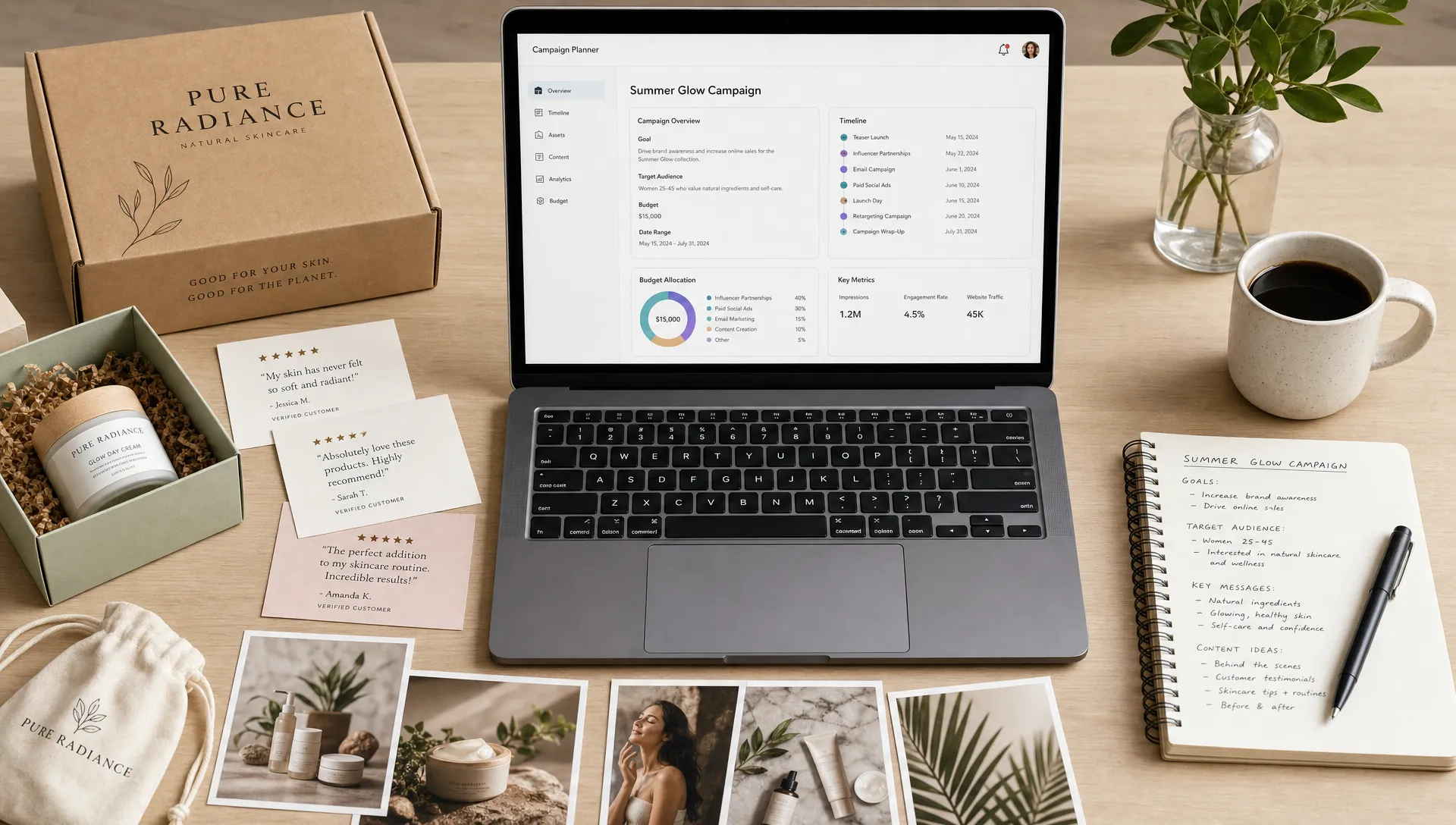
7. Design campaigns around buying moments, not just holidays
Holiday calendars are crowded. Every brand has Black Friday, Valentine’s Day, Mother’s Day, and back-to-school campaigns. The better opportunity is to identify buying moments that are specific to your customer’s life.
A baby brand can market around “first daycare drop-off.” A luggage brand can market around “the first work trip after a promotion.” A wellness brand can market around “the Sunday reset.” A home brand can market around “hosting for the first time in your new apartment.”
These moments are powerful because they contain emotion, identity, and urgency. They also create more original creative than another generic seasonal discount.
Start by listing the moments that happen before someone buys your product. Then build campaigns that speak to the feeling of that moment. What is the customer trying to avoid? What do they want to feel? What would make them proud, relieved, prepared, or excited?
Peak seasons still matter, but they work better when tied to customer-specific context. For seasonal planning inspiration, you can adapt ideas from Needle’s guide to creative campaign ideas for peak season and make them more brand-specific.
8. Turn your best customers into a repeat purchase and referral loop
Your best brand marketers are often your best customers, but only if you make sharing easy and worthwhile.
A strong customer loop has three parts: a reason to reorder, a reason to share, and a reason to feel recognized. Many brands only focus on the referral discount. That can work, but it is not enough to build a brand behavior.
Think about what customers naturally want after purchase. They may want usage tips, styling ideas, recipes, care instructions, replenishment reminders, complementary products, or ways to show their results. That content can lead directly into repeat purchase and referral moments.
For example, a coffee brand could send a brew guide after purchase, then a “send your favorite blend to a friend” campaign after the second order. A skincare brand could send a 21-day routine check-in, then invite customers to share progress for store credit or early access. An apparel brand could invite customers to vote on next season’s color, then offer referral access when the drop goes live.
This drives sales because it turns retention into a brand experience instead of a generic reminder email.
9. Create a signature content series shoppers recognize
Consistency builds memory. A signature content series gives your brand a repeatable format that shoppers can recognize across channels.
This could be a weekly “ingredient breakdown,” “real customer routine,” “founder test lab,” “stylist picks,” “five ways to use it,” “myth vs fact,” or “one product, three moments” series. The key is that the format should connect naturally to your product and buying journey.
A signature series is not content for content’s sake. Each installment should lead somewhere commercial: a product page, quiz, bundle, email signup, waitlist, launch, or customer story.
This is also where content efficiency matters. One strong concept can become a TikTok, Reel, email block, ad hook, landing page section, and product page FAQ. Needle’s guide to content repurposing strategies for DTC brands can help you stretch a single brand idea across more channels without watering it down.
The sales benefit is compounding. Over time, your audience learns what to expect from you, and your team gets faster at producing creative that still feels on-brand.
10. Partner with adjacent brands, creators, or communities
Partnerships are one of the fastest ways to borrow trust, reach new buyers, and make your brand feel more culturally relevant. The best partnerships are not random giveaways. They are built around a shared use case or customer identity.
A supplement brand could partner with a fitness app. A cookware brand could partner with a specialty ingredient company. A pet brand could partner with dog trainers. A travel brand could partner with luggage storage, hotels, or travel creators. A children’s brand could partner with family photographers or daycare communities.
The offer matters. Instead of “win both products,” create something that feels useful: a co-branded guide, starter kit, limited bundle, challenge, class, event, or curated routine.
For ecommerce brands moving into wholesale, corporate gifting, or B2B sales, partnerships can also be sourced through more proactive outreach. If that becomes a serious channel, an AI-powered B2B prospecting platform can help identify buying signals and manage multichannel sequences while your team focuses on brand fit and offer quality.
Measure partnership performance beyond likes. Track email signups, landing page conversion, new customer acquisition cost, first-order revenue, repeat purchase rate, and how many customers are truly new to your audience.
11. Build a quiz or guided shopping experience
A guided shopping experience turns brand strategy into a conversion tool. It helps shoppers feel understood, then directs them toward the right product, routine, size, bundle, or subscription.
Quizzes work best when the questions feel useful rather than gimmicky. Do not ask for data you will not use. Every question should make the recommendation feel more accurate.
For example, a haircare brand might ask about hair texture, wash frequency, styling habits, and goals. A nutrition brand might ask about lifestyle, taste preferences, dietary restrictions, and routine. An apparel brand might ask about fit preferences, occasion, climate, and current wardrobe gaps.
The result page should do more than recommend a product. It should explain why the recommendation fits, show proof from similar customers, answer the top objection, and give a clear next step.
This idea drives sales because it reduces choice overload. It also produces valuable zero-party data you can use in email segmentation, ads, product development, and future campaigns.
12. Use weekly performance learnings to refresh brand creative
The brands that win in 2026 are not the ones that create one big campaign and wait three months to evaluate it. They build a learning loop.
Every week, review what your audience responded to. Which hooks improved click-through rate? Which product benefits increased conversion? Which customer quotes reduced hesitation? Which videos earned saves, comments, or stronger watch time? Which email angles drove revenue without relying on discounts?
Then turn those learnings into new creative. If a customer quote outperforms polished copy, build the next ad around that language. If a bundle sells because of a specific use case, make that use case the center of the next campaign. If a founder story increases email revenue, test it as a landing page section.
This is where AI can help ecommerce teams move faster without losing brand consistency. Needle is built for this kind of workflow: generating marketing ideas, creating on-brand assets, publishing content, tracking results, and turning learnings into ongoing optimization.
The key is not to automate taste out of the brand. The key is to automate the repetitive execution so your team can make better strategic decisions more often.
How to choose the right brand marketing ideas first
You do not need to run all 12 ideas at once. In fact, you should not. Pick the ideas that match your current growth bottleneck.
If traffic is healthy but conversion is weak, start with proof, education, comparison, and guided shopping. If conversion is strong but repeat purchase is weak, focus on customer loops, usage moments, and lifecycle storytelling. If paid acquisition is getting expensive, prioritize positioning, signature content, partnerships, and customer proof that can improve creative performance.
A simple scoring model helps. Rate each idea by expected revenue impact, speed to launch, creative effort, and confidence. Choose one fast test and one deeper brand asset each month. For example, you might launch a customer proof ad test in one week while building a guided quiz over the next month.
The mistake is treating brand marketing as a separate department from performance. Your brand ideas should feed your ads, emails, product pages, retention flows, creator briefs, and merchandising. Your performance data should feed your brand strategy back.
That loop is where brand starts turning into sales.
Frequently Asked Questions
What are brand marketing ideas? Brand marketing ideas are campaigns, messages, content formats, partnerships, and customer experiences that shape how people perceive your brand. The strongest ones also support sales by increasing trust, clarity, urgency, retention, or purchase confidence.
How does brand marketing drive ecommerce sales? Brand marketing drives ecommerce sales by making shoppers more likely to choose you over competitors. It can improve ad performance, product page conversion, email revenue, repeat purchases, referrals, and average order value when connected to a clear buying behavior.
Should small ecommerce brands invest in brand marketing? Yes, but they should keep it practical. Small brands do not need expensive awareness campaigns. They can start with customer proof, stronger positioning, educational content, lifecycle emails, bundles, and partnerships that are easy to measure.
How do you measure brand marketing performance? Track both leading and revenue metrics. Useful signals include branded search, direct traffic, email signups, engagement quality, ad click-through rate, conversion rate, average order value, repeat purchase rate, referral sales, and campaign-attributed revenue.
What is the difference between brand marketing and performance marketing? Brand marketing builds memory, meaning, trust, and preference. Performance marketing captures and converts demand. In ecommerce, the two work best together: brand creates stronger reasons to buy, while performance channels test and scale those reasons.
Turn brand ideas into campaigns faster
A strong brand idea is only valuable if it makes it into market, gets measured, and improves over time.
Needle helps ecommerce brands move from idea to execution faster by generating tailored marketing ideas, creating on-brand assets, publishing campaigns, tracking results, and applying learnings week after week.
If your team has more ideas than execution bandwidth, Needle can help you turn brand marketing into a repeatable growth system instead of another backlog of unused campaign concepts.